
 Arts
Arts
PROGRAMS / LOwer SChool
Specialty Classes
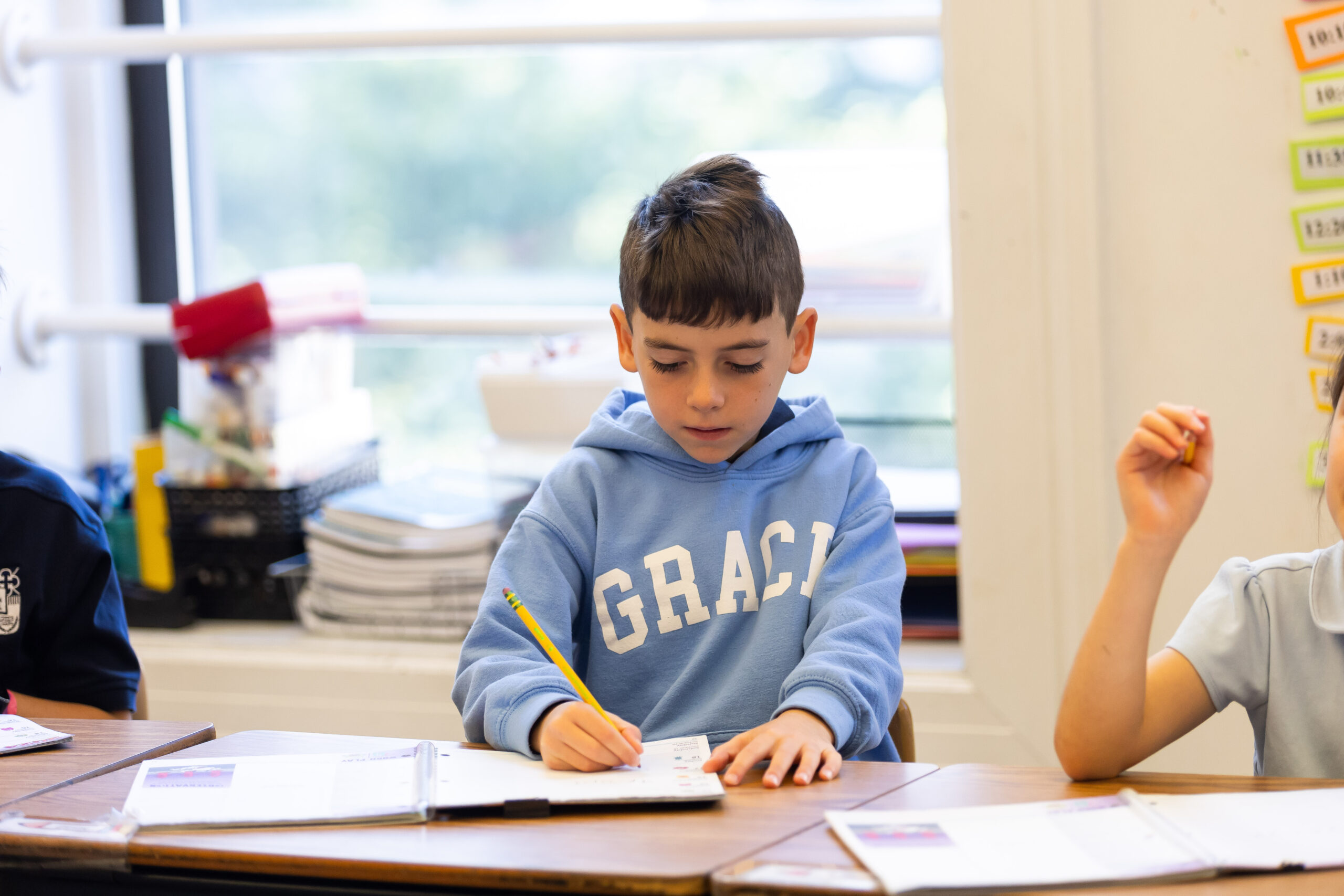
The arts, physical education, world languages, technology, and library are central elements of a Grace education. These disciplines give lower school students new languages for thinking, making, communicating, and connecting with the world around them.
Looking Carefully, Making Intentionally
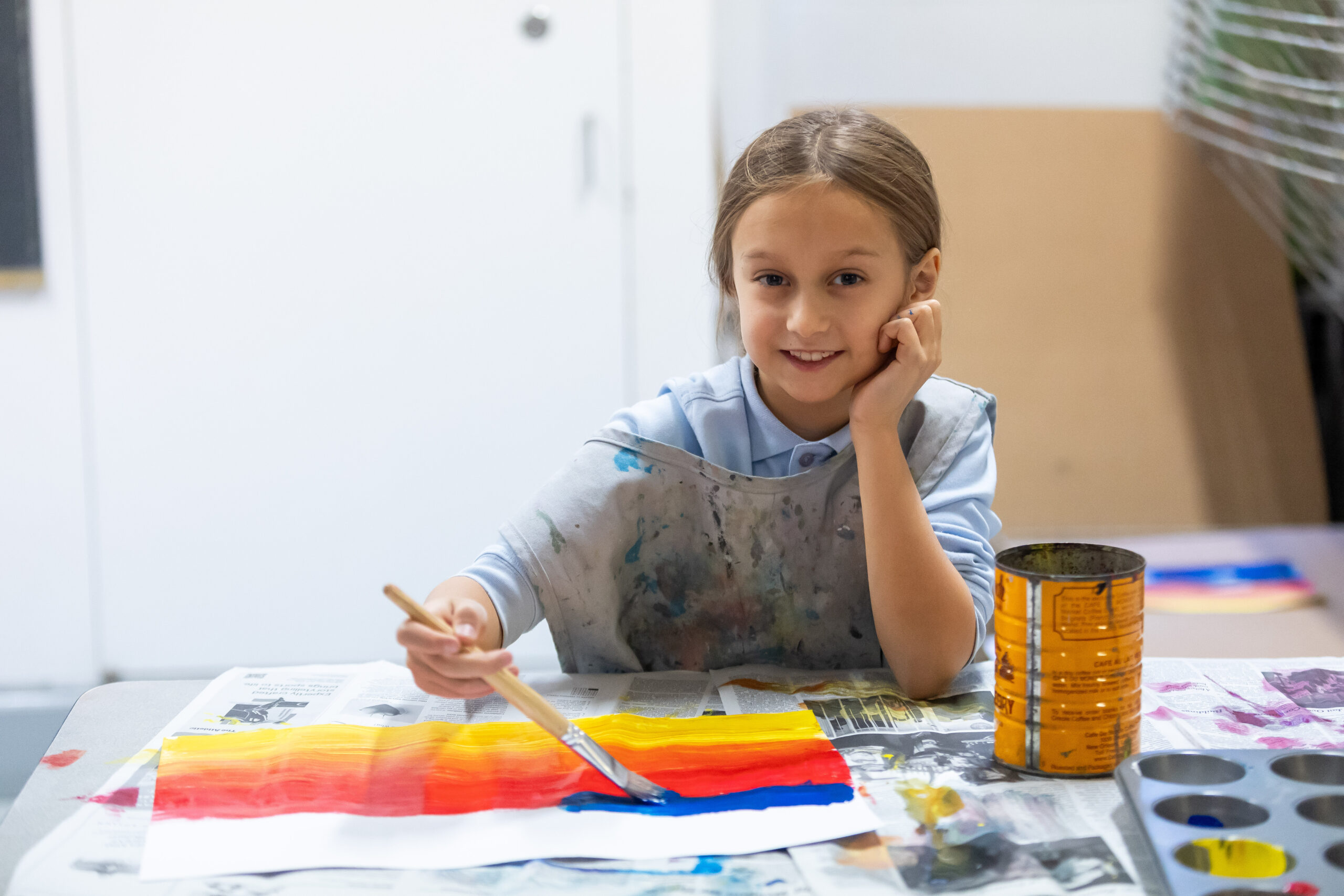
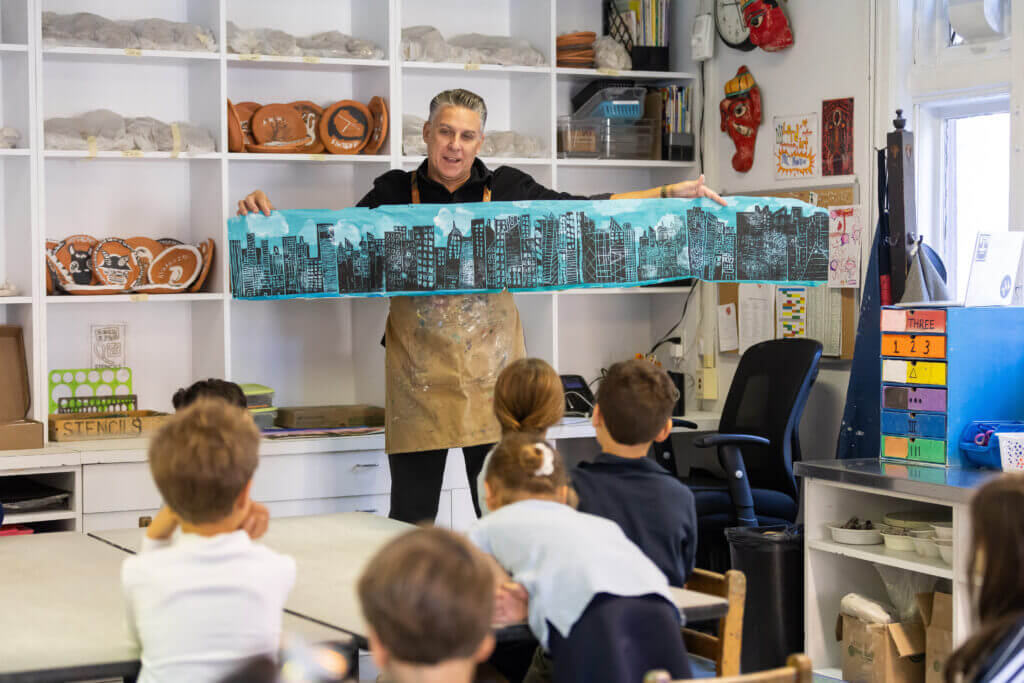
Visual arts in the Lower School deepens students’ engagement with materials, techniques, and ideas, asking them to look more carefully, think more critically, and create more intentionally.
Cross-curricular connections are woven throughout the program. Second graders explore New York City through observational drawings of local birds, ceramic sculptures, and a printmaking project in which individual building drawings combine to form a shared skyline. Third graders work at large scale, constructing papier-mâché tools and sculpting honey bees and honeycombs in connection with their science curriculum. Fourth graders engage deeply with ancient Greek civilization through ceramic amphorae, terracotta plates decorated with scenes from Greek mythology, and papier-mâché masks inspired by Greek theater.
Technique, Expression, and Joy
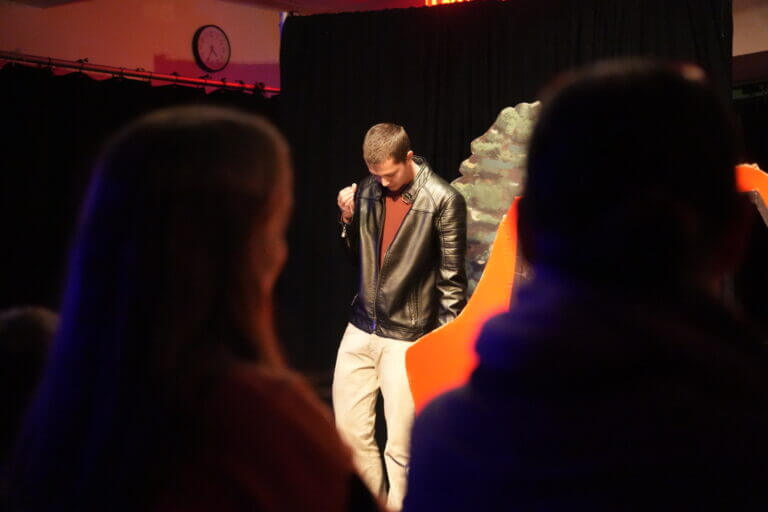
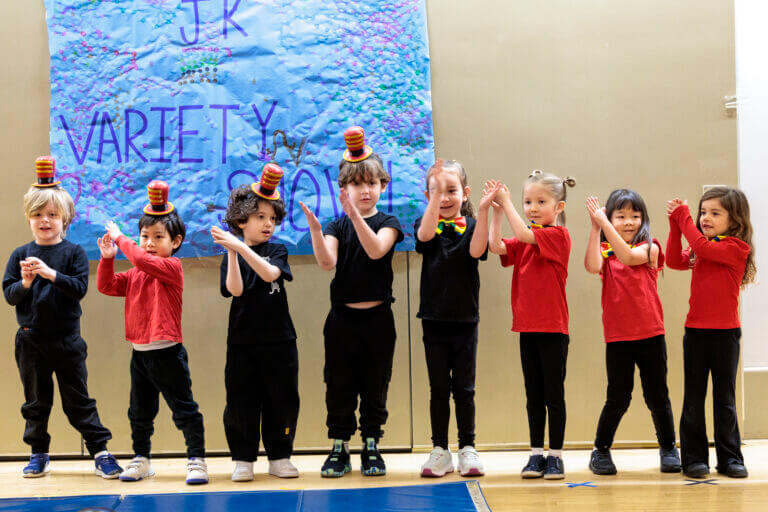
Performing arts in the Lower School encompasses dance and music. It grows in technical demand and expressive depth with each passing year, all the while remaining rooted in collaboration, cultural exploration, and joy.
In dance, second graders build foundational technique through structured warm-ups, locomotor skills practice, and collaborative choreography. Third graders connect their dance studies directly to the social studies curriculum. Inspired by a visit from local Indigenous artists, they explore Indigenous American hoop dance and later study the Harlem Renaissance through tap. Fourth graders deepen their technical skills and expressive range across contemporary, jazz, and hip hop styles.
In music, second graders expand their vocal range, begin part work, and develop both instrumental and vocal technique while learning about the science of sound. Third graders sing in two- and three-part harmony, read music using solfège, and begin reading and writing sixteenth notes. Fourth graders build independence and leadership in classroom routines, experiment with acoustics and sound amplification, and begin playing recorder.
From Play to Sport
Physical education in the Lower School builds on the foundational movement skills and play of Early Childhood, introducing students to the rules, strategies, and etiquette of team sports in an environment that consistently emphasizes sportsmanship, fair play, and respect. Second graders develop throwing, catching, dribbling, passing, and shooting skills through small-sided games in handball, basketball, and soccer. Third graders refine these skills through lead-up games in Ultimate Frisbee, team handball, and basketball. Fourth graders engage with a broad range of sports and activities, with teachers modifying games to ensure every student is appropriately challenged and experiences success.
These disciplines give lower school students new languages for thinking, making, communicating, and connecting with the world around them.
Through the engaging Library curriculum, students are introduced, year by year, to independent research skills and the pleasures of serious literary engagement.
Language, Culture, and Connection
World language instruction begins in third grade, when students choose either Spanish or French as their first new language of study. Both tracks share a common philosophy: Language learning is most effective when it is creative, immersive, and connected to cultural studies.
In Spanish, third graders build foundational vocabulary around themes such as greetings, animals, family, and daily life, exploring the language through crafts, songs, and visual activities. Fourth graders build on this foundation, expanding their vocabulary and developing the ability to talk about themselves and others through games, art, and collaborative projects.
In French, third graders are introduced to the language through an immersive, curiosity-driven approach, exploring vocabulary, culture, and the breadth of the francophone world through music, dance, and language games. Fourth graders deepen their skills and put them to use in a culminating restaurant project, in which they create menus, set the scene, and welcome French-speaking teachers as guests to practice real conversational French.
Fluency, Creativity, and Digital Citizenship
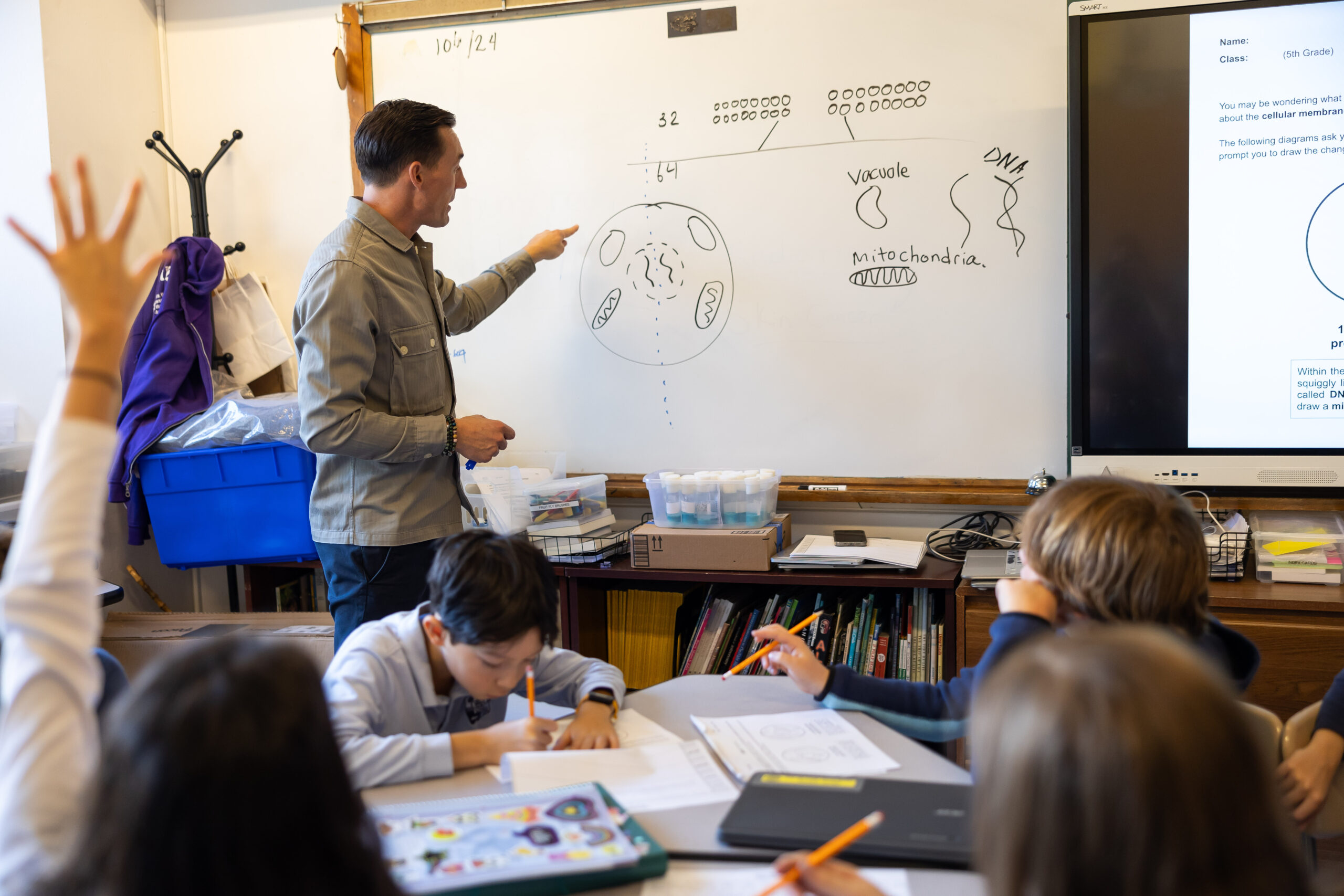
Formal technology instruction begins in second grade and builds progressively across the Lower School. The goal is to develop students’ confidence and fluency in the use of these tools, growing technology literacy alongside digital citizenship.
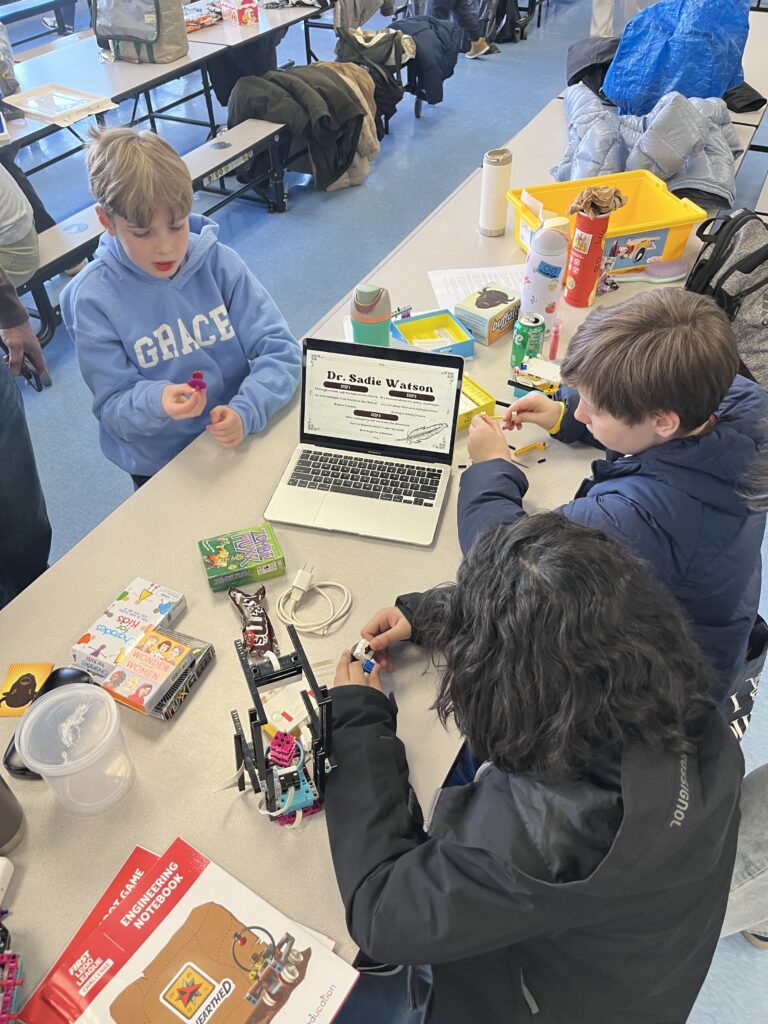
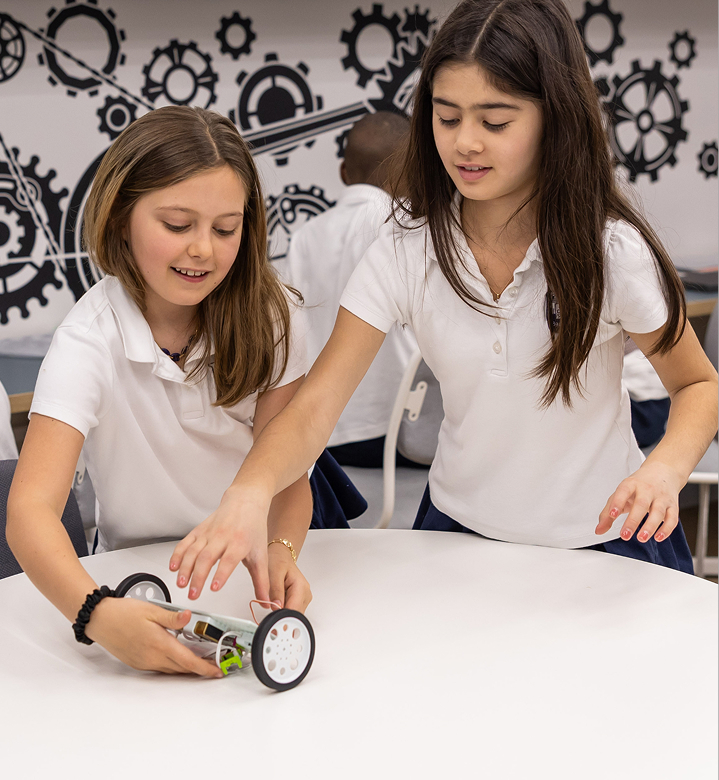
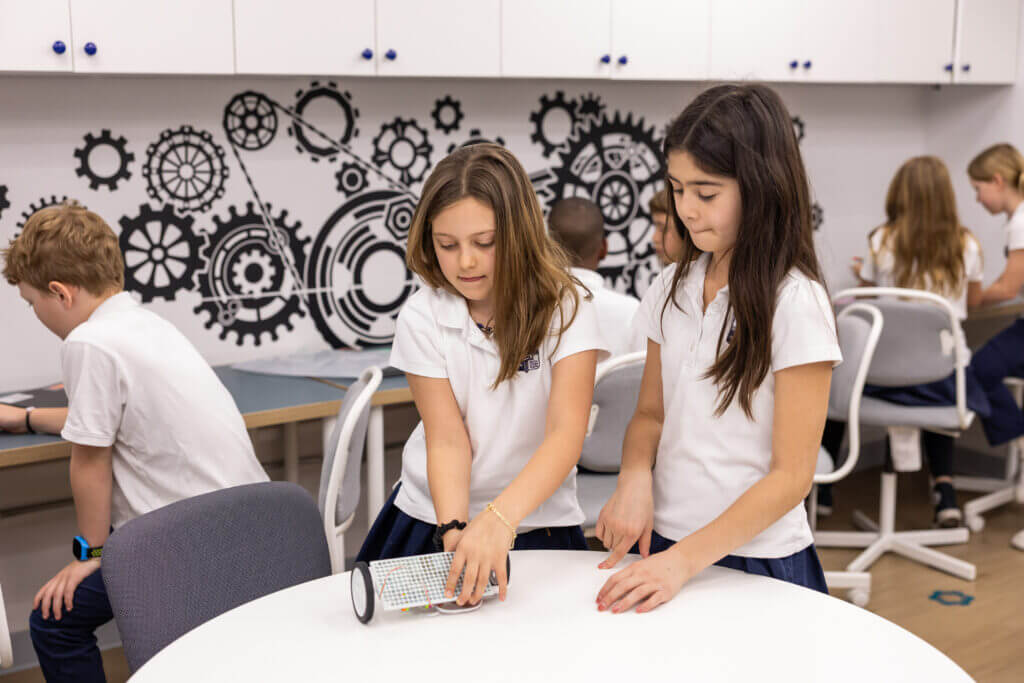
Second graders explore the iPad and web environment, practice essential multimedia skills, and apply newly acquired 3D design skills to a cross-curricular leaf science project. Third graders deepen their digital literacy through Google Workspace, intermediate 3D design, and an exploration of electricity and circuits—culminating in a project in which students design neon light displays that reflect the values of Grace. Fourth graders expand further into advanced creative technologies, including virtual reality design, computational thinking platforms, and engineering challenges using littleBits, while integrating their skills across the curriculum through a New York cityscape design project.
Intrepid Readers, Independent Researchers
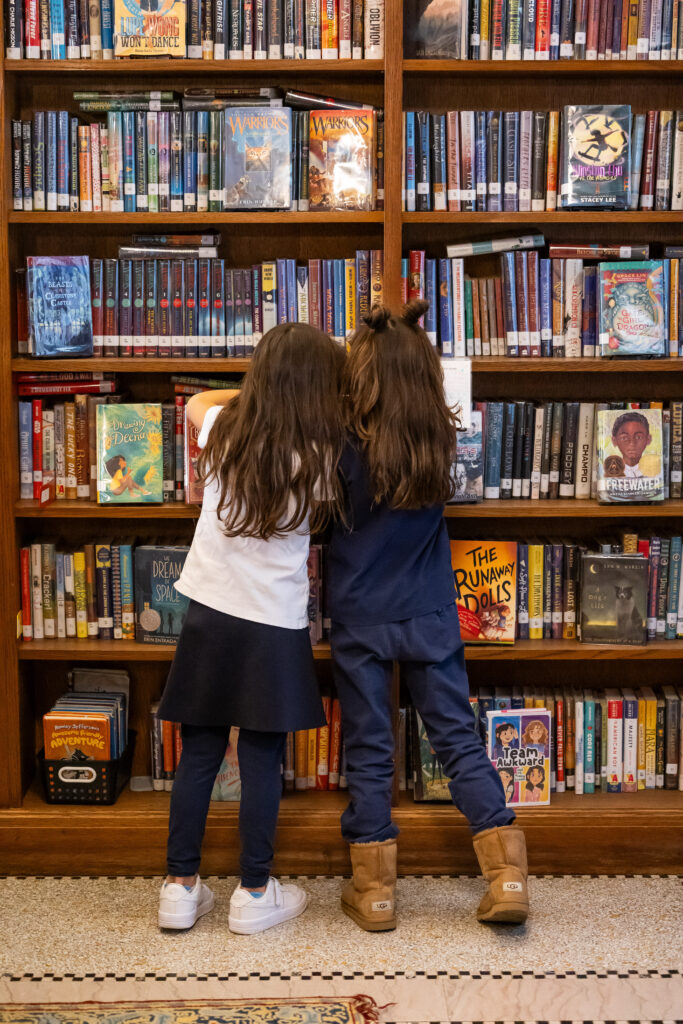
Library in the Lower School is where students deepen the habits and skills of lifelong readers and independent researchers. Through the engaging curriculum, they are introduced, year by year, to independent research skills and the pleasures of serious literary engagement.
Second graders expand their understanding of genre and subgenre, develop independence in navigating the library catalog, and vote for the winner of the Irma Black Award, evaluating picture books alongside students from around the world. Third graders build on these skills, exploring graphic novels and other literary forms, and cast their votes for the Cook Prize, a STEM-focused picture book award with a global reach. Fourth graders round out their lower school library experience with the Mock Caldecott, spending a month learning to apply professional criteria to evaluate books published in the previous year, then comparing their vote to the American Library Association’s official selection. Students across all three years may also enjoy visits from authors and illustrators of books for children, bringing the work they encounter on the page to life. It is a fitting capstone: By the time students leave the Lower School, they are not just confident readers—they are intrepid young researchers and budding literary critics.