
 Arts
Arts
PROGRAMS / eArly childhood
Specialty Classes
At Grace, the visual and performing arts, physical education, and library classes are not extracurriculars—they are central to a Grace education. These disciplines give students new languages for thinking, making, and expressing themselves, complementing the work they do in their core academic subjects.
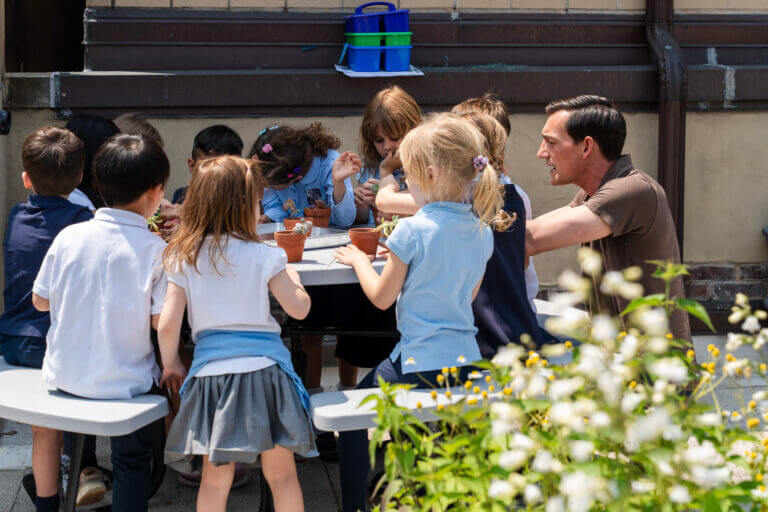
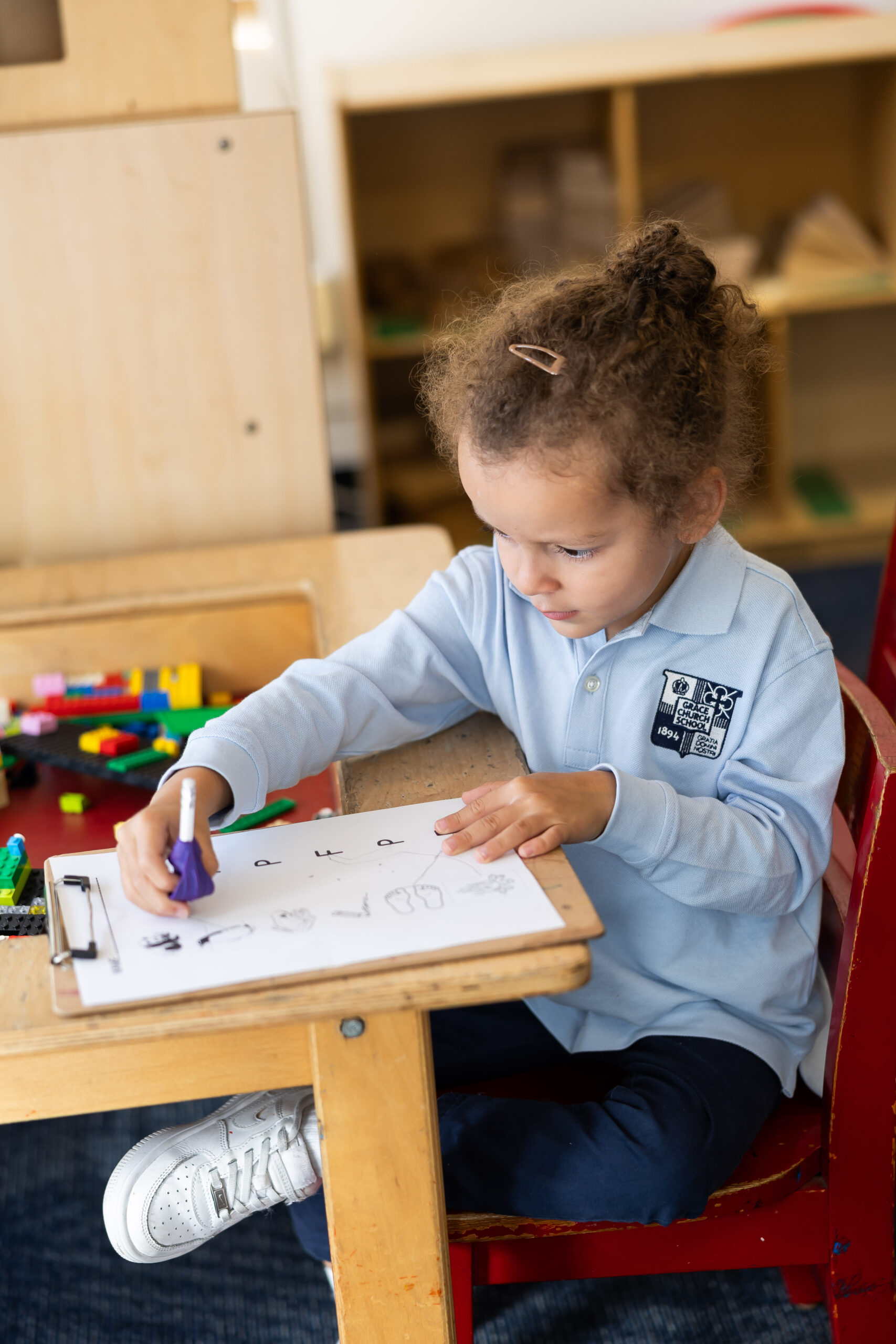
Visual arts in Early Childhood seeks to embrace the artist in every child and to offer each child new ways to explore, collaborate, problem solve, and develop their individual voices through creative expression. From their first days in the art studio, students are encouraged to approach creative problems with imagination and independence, learning to see the world as something to be made and remade. In junior kindergarten, students are introduced to the studio space and its materials—clay, paint, collage—and begin developing the habits of observation, experimentation, and care. Kindergarteners build on these foundations, working at a larger scale and making increasingly independent choices about materials and approach. Projects often relate to the community and larger world around them, with a continued focus on imagination and self-expression. First graders explore the artistic traditions from around the world, integrating their visual art work with their social studies and science studies of artistic histories, cultural traditions, and ecological diversity. Students practice the basic elements and principles of visual art through a dynamic range of 2D and 3D media, including painting, drawing, sculpture, ceramics, printmaking, and textile arts.
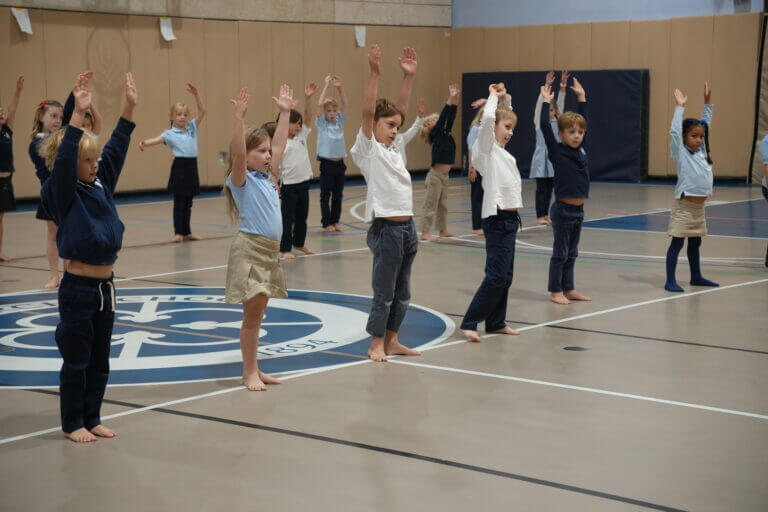
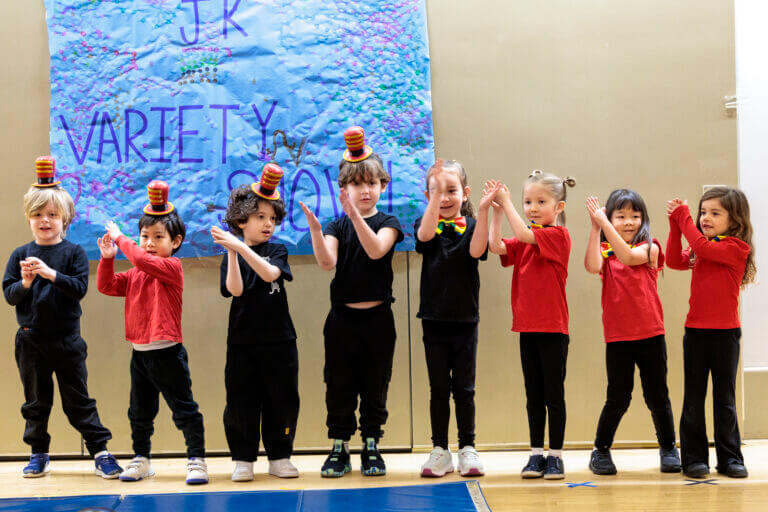
Performing arts in Early Childhood gives students the opportunity to explore the use of their body and their voice as a means of self-expression and joy. Through dance and music classes, students learn to collaborate with their classmates and to perform with growing confidence and skill. Junior kindergarteners practice locomotor dance movements, singing, and rhythm instruments, building singing, rhythm, and improvisational movement skills. Kindergarteners deepen these abilities through creative dance, vocal work, and an introduction to tap in the spring term, culminating in a tap performance. First grade music incorporates both Kodaly and Orff methodology, and students develop technique and greater performance fluency through folk music and composed works from around the world. In dance, they explore levels, directions, and pathways and study specific traditions including classical Indian dance, square dance, and contra dance. The connection between dance and the visual arts is a topic that is explored in depth.
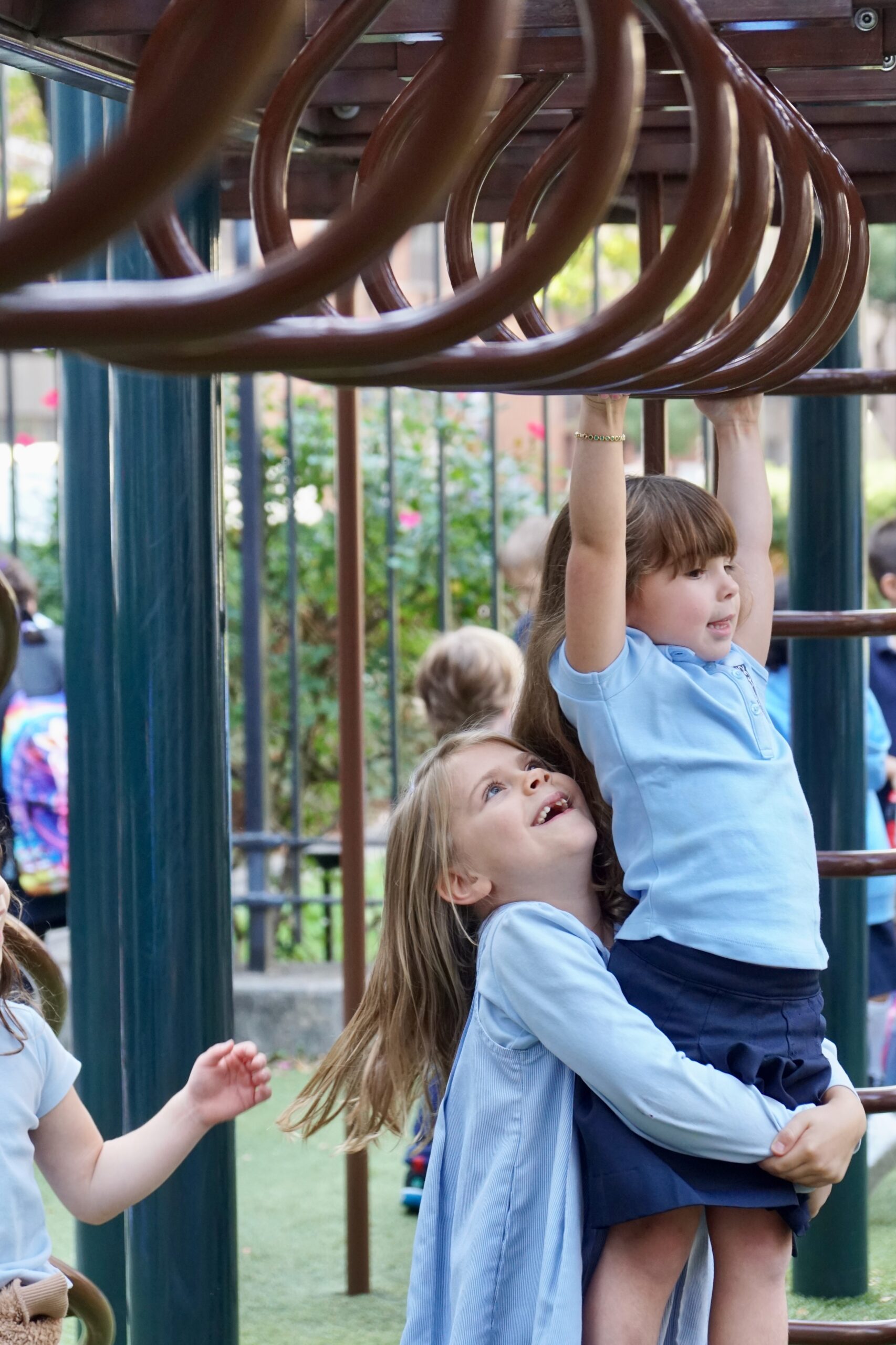
Physical education in Early Childhood leads students through joyful, play-based experiences that build strength, agility, coordination, and balance alongside values like empathy, fair play, and cooperation. In junior kindergarten, the program emphasizes gross motor development and spatial awareness, using structured games, tumbling, and free play to help students become more attuned to themselves and their peers. Kindergarteners engage more intentionally with manipulative and sports skills, developing coordination and a growing understanding of rules and strategies. By first grade, the curriculum places a stronger emphasis on refining fundamental movements and building a solid foundation for future sports and physical education. Students refine fundamental movements and participate in lead-up games that introduce the objectives, etiquette, and strategies of team sports. Daily recess offers an additional opportunity to practice and reinforce the skills students learn in P.E. class.
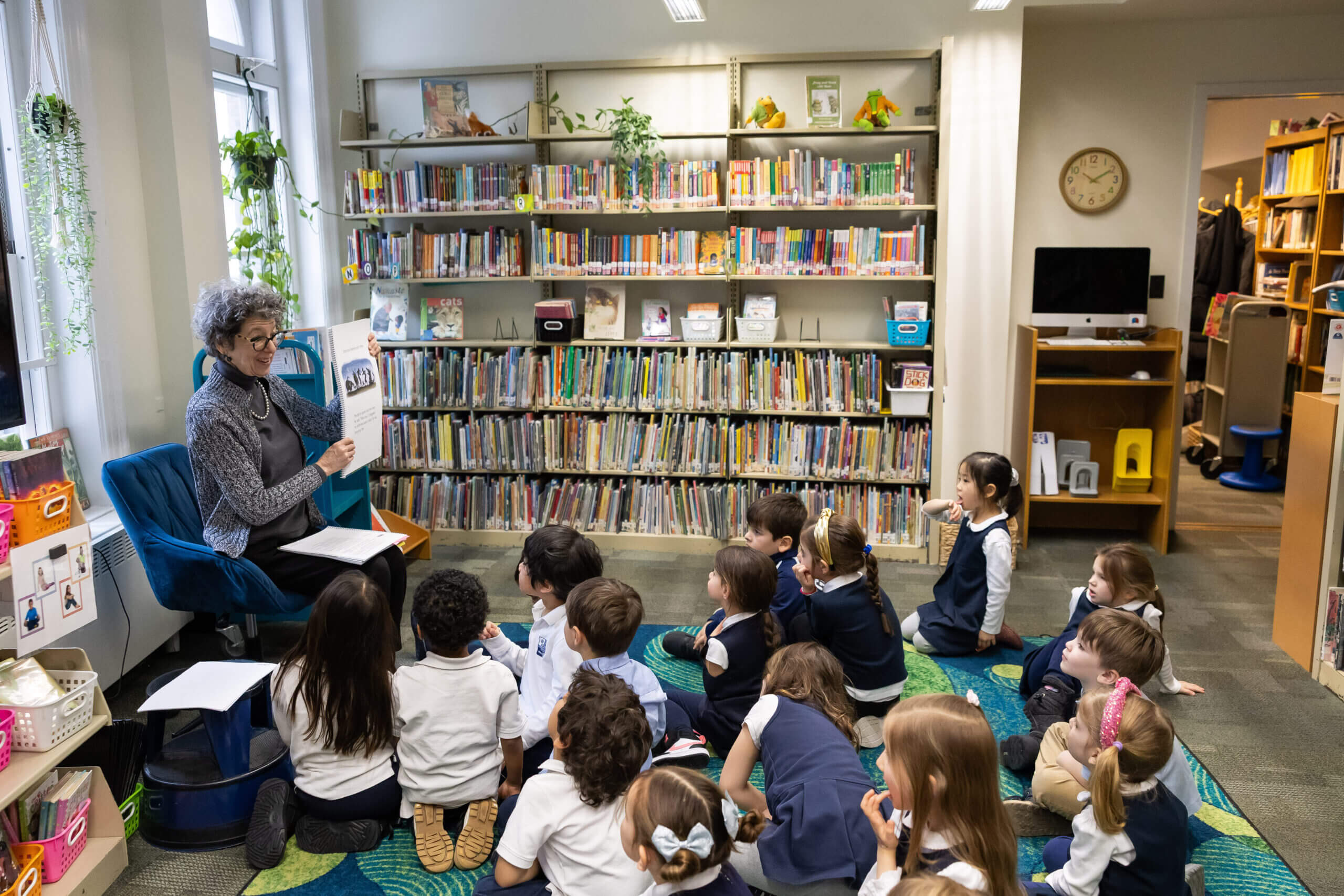
Library in Early Childhood is where students learn that reading is not just a skill but a pleasure and a lifelong habit worth cultivating. Students visit the library once a week to listen to read-alouds, discuss stories and characters, and choose books to bring back to the classroom. In junior kindergarten and kindergarten, students explore the parts of a book, learn how to care for library books, and study the works of individual authors and illustrators in dedicated units. First graders take their books home for the first time and delve into longer works of fiction alongside biographies. In the spring, they participate in an international picture book award competition—listening to, discussing, and voting on four books from around the world. Throughout the program, guest authors visit Grace to read aloud and answer students’ questions about their creative process and how they write, illustrate, and ultimately, publish their beloved children’s books.
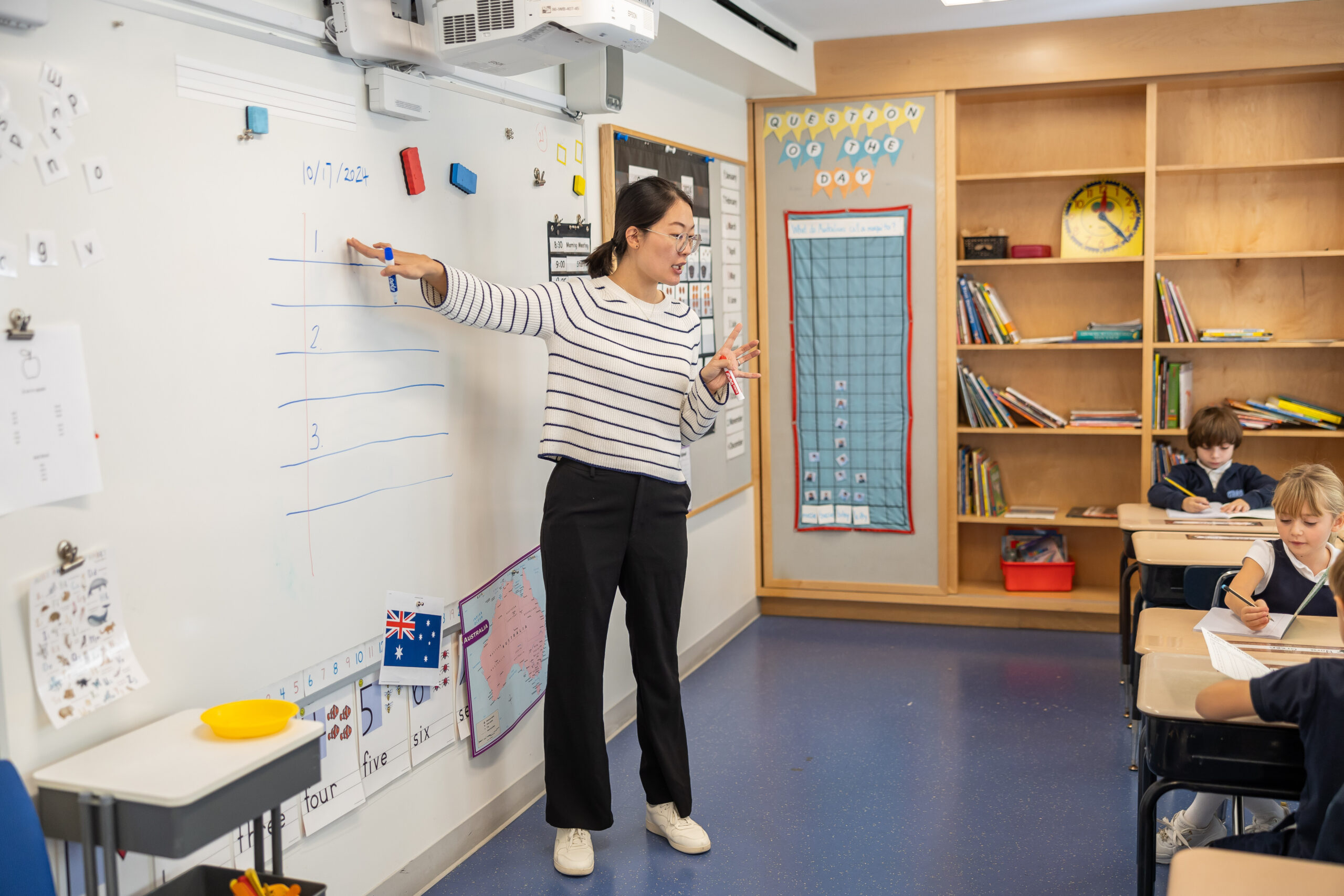
Across all disciplines, our teachers ground their approaches in evidence-based practices about how young children learn, providing every student with the support and challenge they need to grow.