

A Whale of a Time in JK Science
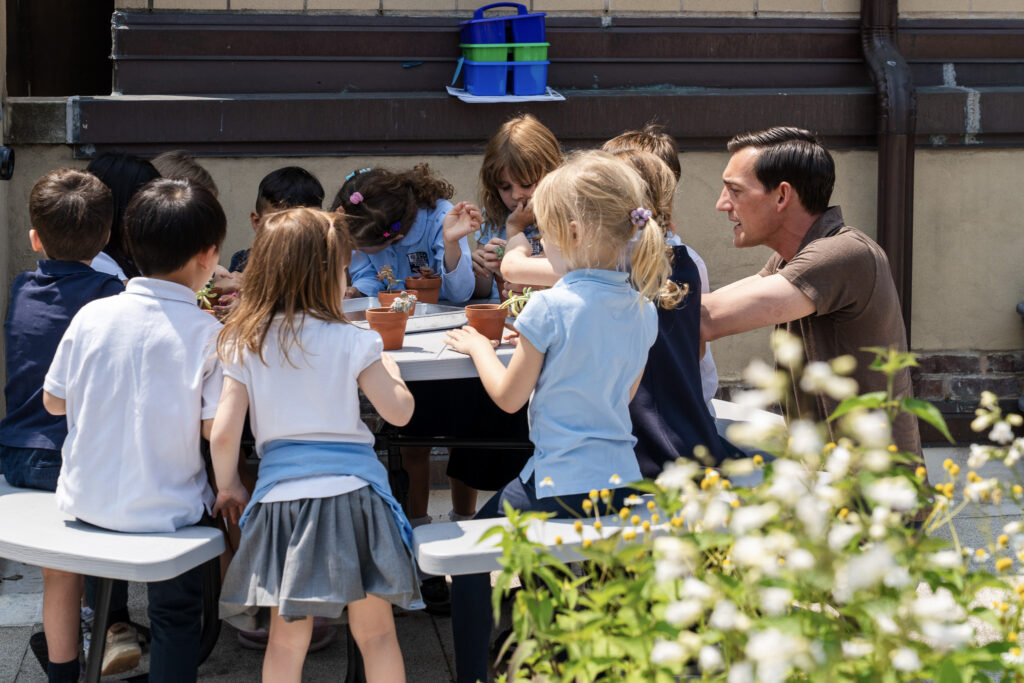
Ask a junior kindergartener at the beginning of the year what humans and whales have in common, and they might say, “Nothing!”
But ask them again after they learn all about whales with science teacher Schuyler Semlear, and you will get a very different answer. Junior kindergartens spend part of their year learning about mammals and the characteristics they share—live birth, nursing, fur or hair covering their bodies (yes, even whales!), and breathing with lungs.
Mr. Semlear explores several facets of a whale’s life with his students, including how they stay warm in icy ocean waters (students conduct a “blubber experiment,” plunging their hands into a bowl of cold water with a protective layer of Crisco used to simulate a whale’s blubber) and how they communicate using sound waves (students use tuning forks to understand how sound travels through water).
And, of course, no discussion about whales would be complete without discussing their gargantuan size. Students compare the beluga whale (the smallest of their trio), the humpback whale (in the middle), and, of course, the mighty blue whale (the largest animal to have ever lived on Earth). Determined to help his young scientists make sense of the staggering measurements, Mr. Semlear travels around the school with students—and a very long piece of string—in search of places the different whales might fit. Could a blue whale stretch from one side of the play yard to the other? Or perhaps they could fit vertically in the stairwell? (Ask them if you’d like to find out!)
Learning about whales also means confronting some serious realities. In age-appropriate ways, Mr. Semlear helps students gain an understanding of the environmental dangers whales face due to human activity, including collisions with ships, ocean pollution, and hunting. Students learn that many species of whales are endangered as a result—and that protecting the oceans matters for animals and humans alike.
By the end of the unit, junior kindergarteners have asked big questions, tested bold ideas, and drawn connections between their own lives and the natural world. Along the way, whales become the perfect larger-than-life case study, and just one example of how our teachers spark joy, curiosity, and wide-eyed wonder throughout our students’ academic journeys.