
 Academics
PROGRAMS / High SChool
At Grace, the arts and technology are a core part of the academic program. From ninth grade through twelfth, students engage with drama, dance, music, and the visual arts as serious disciplines that demand intellectual rigor, creative risk-taking, and sustained commitment. Technology stands alongside the arts as a distinct and important focus of study, asking students to think algorithmically, design creatively, and engage thoughtfully within the ethical complexity of a rapidly changing digital world. Beyond the arts and technology, a wide range of elective offerings gives students additional ways to develop skills, pursue passions, and contribute to the life of the school.
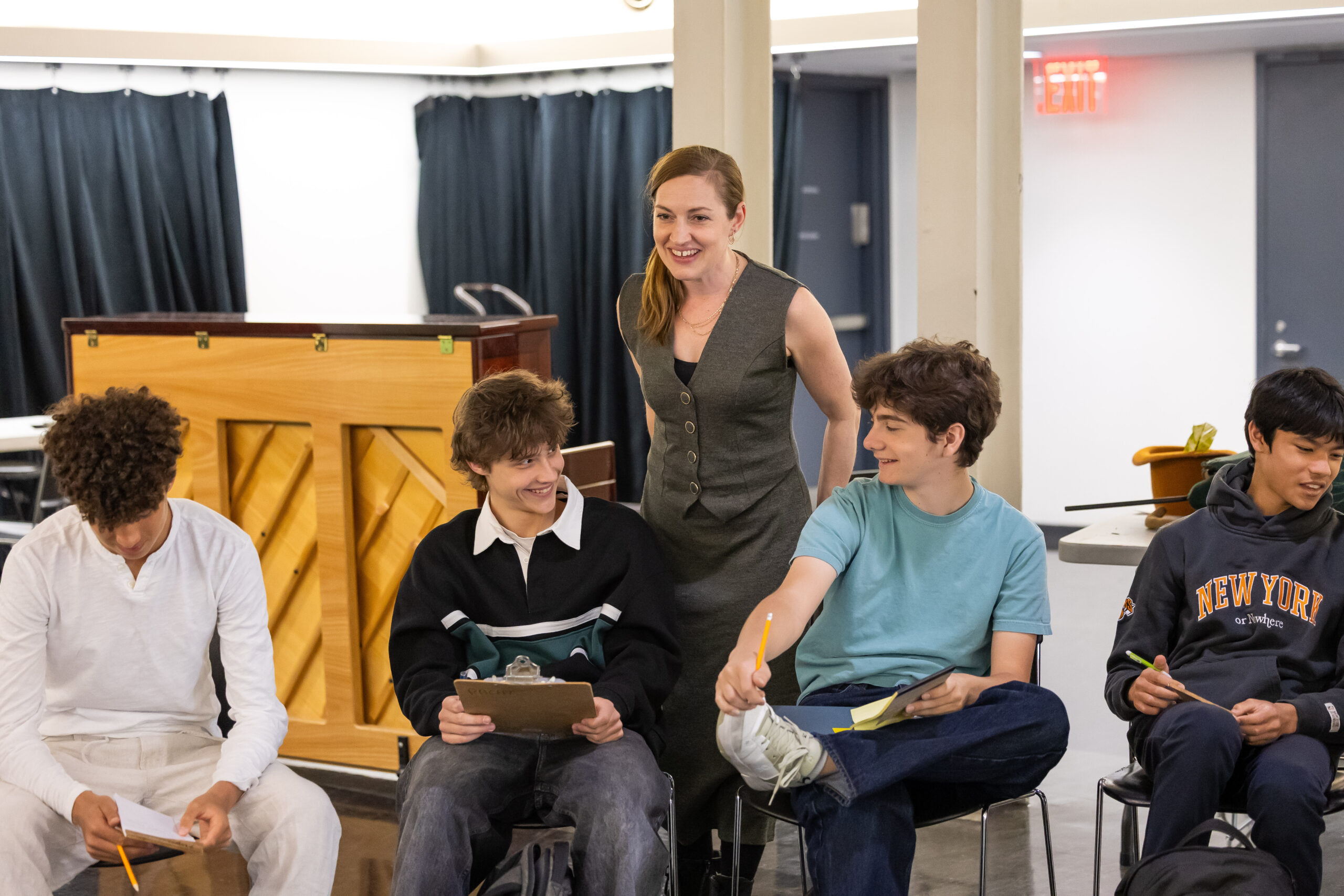
The drama program at Grace gives students both the analytical abilities and the practical skills to develop a genuine artistic voice and to understand how those tools serve them beyond the stage. Students begin with Collaborative Theater Arts, an ensemble-driven introduction to improvisation, physical theater, and character development that draws on Greek Chorus, Commedia dell’arte, and Wayang Kulit as foundations of theatrical storytelling. From there, students progress through Theater Practicum: Voice and Text, which uses the Linklater technique to develop vocal resonance, range, and emotional truth, and into advanced scene study and performance courses in tragedy, comedy, and musical theater. Students with a serious commitment to the art form may apply to the Theater Studies Major, a yearlong course that surveys dramatic literature and practice from ancient Greece to the present, incorporates work with guest artists and trips to local theaters, and culminates in a devised ensemble performance. The program produces three main stage performances each year: a Fall Play, a student-written and directed Winter Series, and a Spring Musical. The fall and spring productions are staged at professional off-site theater spaces in New York City, giving students the experience of working at a professional level in the theater capital of the world.
The dance program at Grace operates on a simple and inclusive premise: anyone can dance, and everyone has something to offer. The studio welcomes students of all levels and backgrounds—from seasoned dancers to first-timers, with athletes alongside actors—and asks all students to stretch beyond their comfort zones. Students begin with Dance Fusion, an introductory course that moves across Modern/Contemporary, Jazz, Ballet, and dances from the African Diaspora including Hip-Hop and House. From there, students may progress through Contemporary Flow, ChoreoLab, Dance From Studio to Stage, and Movement & Media, each of which deepens their technical skill, choreographic voice, and cultural understanding. Students with exceptional dedication may audition for the Grace Dance Ensemble, which rehearses two to four times per week, performs throughout the year, including at the annual dance concert, and regularly works with critically acclaimed guest artists. Past collaborators have included Jennifer Weber of Decadance Theater, Maria Bauman of MB Dance, and the Nai-Ni Chen Dance Company.
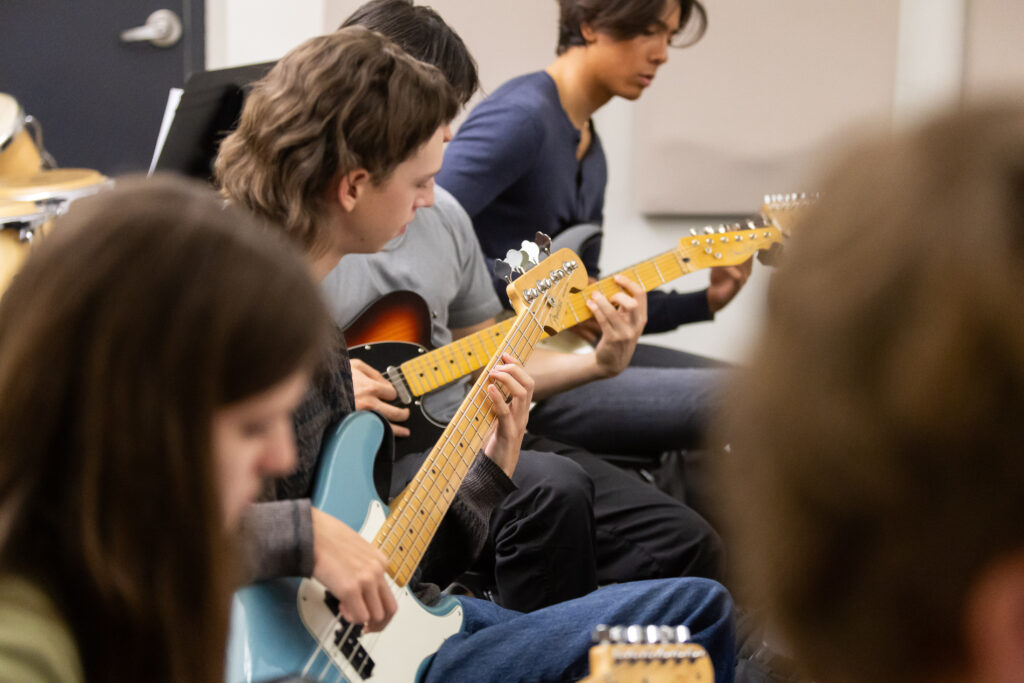
The instrumental music program develops students as musicians who understand that every instrument in an ensemble is an essential part of a larger whole—a lesson that will serve them for the rest of their lives. Students with no prior experience may begin in one of the introductory ensembles; more experienced students join intermediate or advanced jazz, string, or band ensembles. The program’s jazz offerings progress from Beginning Jazz through Jazz Lab I and II, Jazz Combo, and Jazz Ensemble, with the most advanced students eligible to apply to the Jazz and Contemporary Music Major. This yearlong course combines advanced jazz theory and harmony with the development of a recorded portfolio suitable for college auditions. Students may also elect Jazz Theory & Harmony and Recording Production as semester courses.
The vocal music program’s central conviction is that singing with joy is not just singing, it is artistry. Students start with Beginning Vocals, developing breath technique, ensemble skills, and performance preparation, before progressing to Intermediate Vocals. Ultimately, students may join GraceNotes, Grace’s primary vocal ensemble, which performs on average once or twice per month throughout the year and holds itself to a professional standard of musicality. Students with a serious interest in vocal music may apply to the Vocal Music Major, a yearlong course that spans the history of vocal music from Western Art Music and Opera through Jazz, Musical Theater, and contemporary styles, and culminates in a portfolio of recorded work for each student. Outside of formal coursework, all students may join Glee Ensemble, a student-driven before-school ensemble open to singers of all abilities and levels.
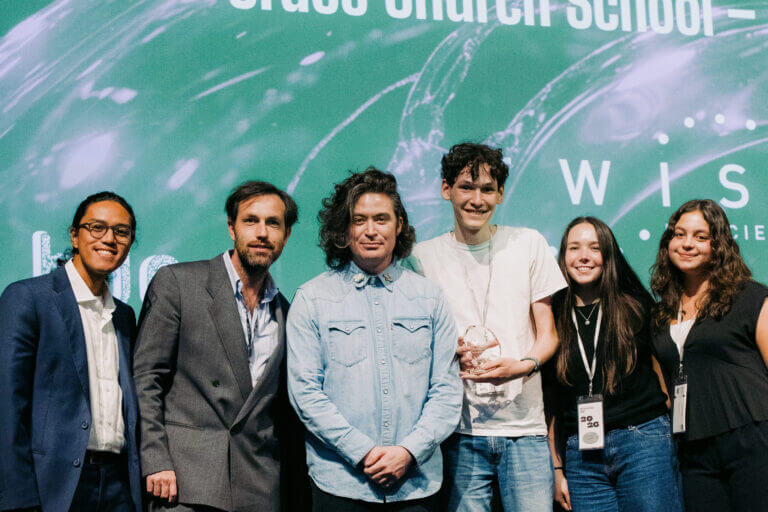
“Problem solving in the tech major course requires that we include ourselves as constraint. We question how else might we represent this problem, and how we can include the influence of not-knowing.“
Dr. Akbar Ali Herndon, Chief Technology Officer
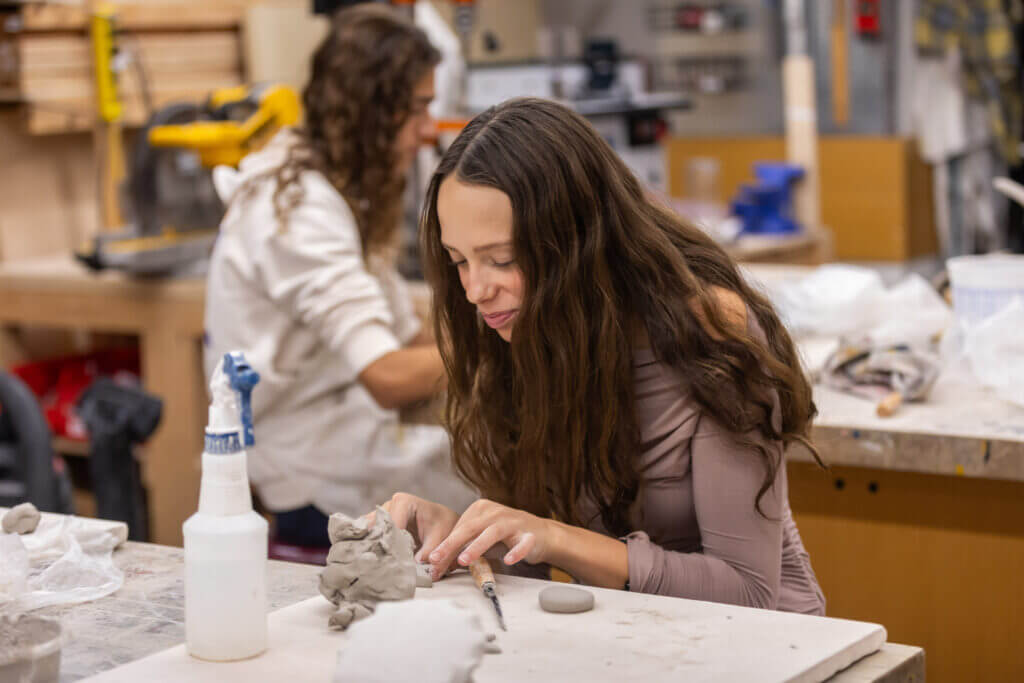
Visual arts at Grace develops students as inventive, abstract thinkers who learn to see the world as something to be made and remade. It is a discipline that demands the same intellectual rigor, creative risk-taking, and sustained commitment as any other academic course. In ninth and tenth grade, foundational courses in Drawing, Visual Thinking, Sculpture, and Photography introduce students to the core vocabulary and processes of artistic production: composition, color, scale, materiality, and the relationship between observation and imagination. In eleventh and twelfth grade, students build on these foundations in upper-level courses including Painting, Drawing and Printmaking II, Sculpture II, and Photography II, each of which pushes them toward greater independence, conceptual depth, and personal voice. Students with a serious commitment to visual art may apply to the Visual Art Major or the Film and Media Major, yearlong courses taken as one of a student’s five academic majors, in which students develop an independent body of work informed by sustained research and studio practice. Film and media students study the history of cinema alongside industry-standard filmmaking techniques, submitting their work to regional and national film festivals. Visual art majors pursue conceptually driven studio projects informed by exposure to diverse historical lineages of artists and ideas, as well as site visits and readings. Each spring, Visual Art Majors present their independent bodies of work at the High School Art and Music Night, alongside work from students in arts electives, and celebrate the launch of ephemera, Grace’s student-run art and literary magazine.
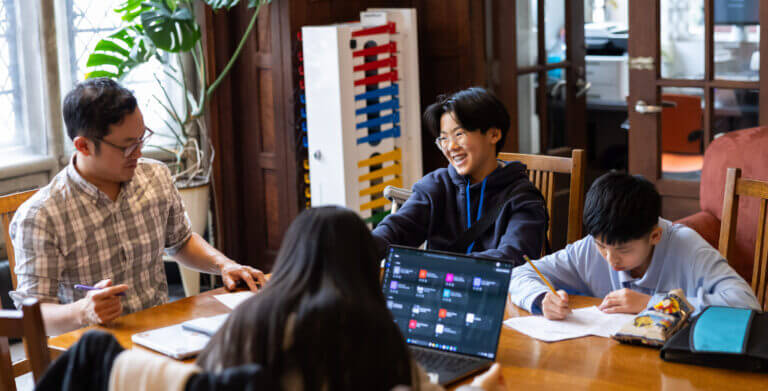
Technology at Grace is taught as both a practical skill and a critical discipline. Students learn not just how to use digital tools, but also how to think carefully about the role of technology in the world in which they will be living. In ninth grade, all students complete Digital Tools & Citizenship, an introduction to the tools, programs, and ethical frameworks that underpin digital life. In tenth grade, students continue with a second semester of Digital Tools & Citizenship, elect Computer Programming, Robotics, or choose from a range of technology electives including Introduction to Artificial Intelligence, Creative Game Development, Fashion Technology, and Computer Aided Design & 3-D Prototyping. In eleventh and twelfth grade, students with a serious interest in technology and computer science may apply to the Technology Major, a yearlong course that develops advanced programming skills in Python, SQL, and JavaScript alongside a deep engagement with topics including AI, privacy and surveillance, and technology entrepreneurship. Throughout, the goal is not just technical fluency but the ability to navigate thoughtfully and ethically in and with digital spaces.
In Journalism, students produce The Grace Gazette, the high school’s digital news site, developing skills in reporting, editing, photojournalism, podcasting, and social media.
In Yearbook Journalism, students lead the design and production of the Grace yearbook, taking ownership of every aspect of the publication from theme and content to photography, typography, and distribution.
In Culinary Arts, students develop essential kitchen skills—knife technique, cooking methods, pastry making, and sauce work—alongside a deep respect for food and the craft of cooking.