
 Academics
ABOUT / EDUCATIONAL PHILOSOPHY
Time is a school’s most precious resource. At Grace, we are passionate about using the time we have with students in ways that advance the high aspirations of our mission.
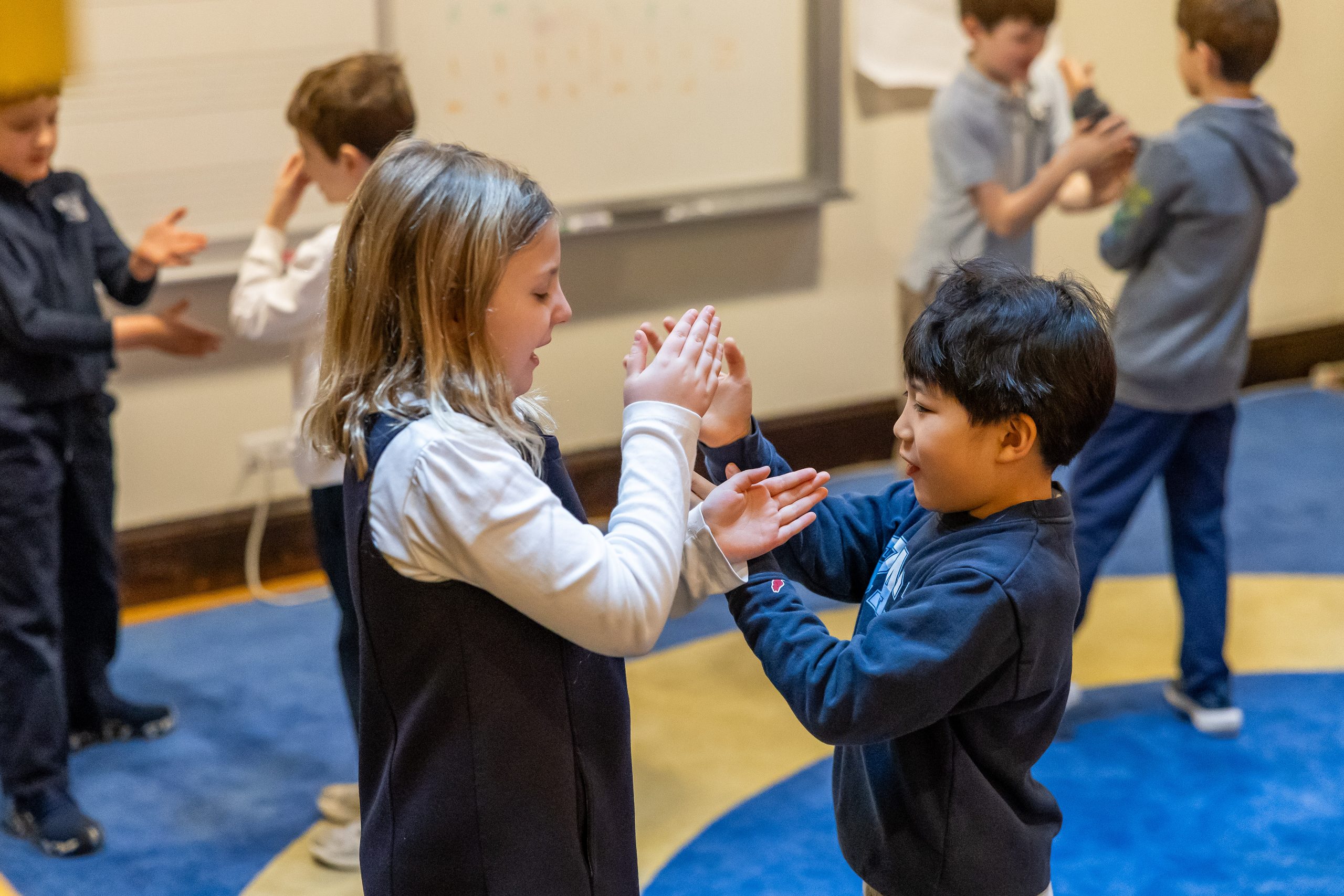
Academic rigor at Grace does not mean pressure for its own sake. It means that every student, in every grade and across every discipline, feels both challenged and supported. We want students to struggle productively, make mistakes, revise their thinking, and discover what they are capable of. And we want them to like who they are when they are doing it.
This is what we call our pedagogy of joy: the belief that students who feel genuinely known, genuinely curious, and genuinely supported become not just stronger learners, but better people. Our teachers pursue this through evidence-based approaches to how children learn, grounded in research, attentive to each student, and built on the conviction that difficulty and joy are not opposites.
Grace’s academic program is built on the belief that great thinking requires the same qualities that underpin the development of strong ethics: humility, curiosity, openness, and courage. Mastering a new language, solving a complex problem, or writing a persuasive argument demands the rigorous practice of intellectual honesty, empathy, and the capacity to sit with hard questions and multiple perspectives.
We call these the habits of ethical virtue, and we cultivate them alongside the skills of intellectual excellence from junior kindergarten through twelfth grade. Students learn not just what to do in a given moment, but are called to reflect on who they want to be in that moment. That question is at the heart of a Grace education.
Learning at Grace is cumulative and intentionally structured, providing expanding opportunities for challenge, knowledge, creativity, independence, and agency in each division. In Early Childhood, teachers channel students’ natural curiosity about the world to develop the foundations of literacy, mathematics, and community, rooted in a curriculum that sparks and deepens the joy of learning. In the Lower School, students develop the discipline to ask hard questions and work through difficulty with resilience, drawing connections among the cultures and people they study, the stories they read, and the skills they build to their experiences in the expanding world around them. In the Middle School, they continue to find their individual voices, taking on greater independence as leaders of the JK–8 campus, grappling with more abstract and complex ideas in the classroom, and beginning to discover more about what they love and what they believe. In the High School, they step out into the world, pursuing their multifaceted interests with rigor, focus, and a stronger sense of who they want to be as students and as people. To learn more about each division, visit Early Childhood, Lower School, Middle School, and High School.
Grace Church School was founded in the Episcopal tradition, and that tradition shapes who we are—not as doctrine, but as a commitment to the inherent dignity of every person. We welcome families of all faiths and none, and we seek to cultivate a community of broad welcome and deep belonging, where every student knows their own intrinsic worth and is inspired to serve that of others. Chapel, service learning, and a JK–12 curriculum in religion and ethics are not peripheral to a Grace education but rather part of how we help students become people of integrity, compassion, and purpose.
Teaching with Grace is a four-part framework that guides our faculty across every interconnected dimension of their work: designing courses, teaching lessons, building relationships, and modeling virtues. It is purposeful and relational, grounded in the belief that intellectual excellence and ethical virtue grow together, and that great teaching is where both begin.
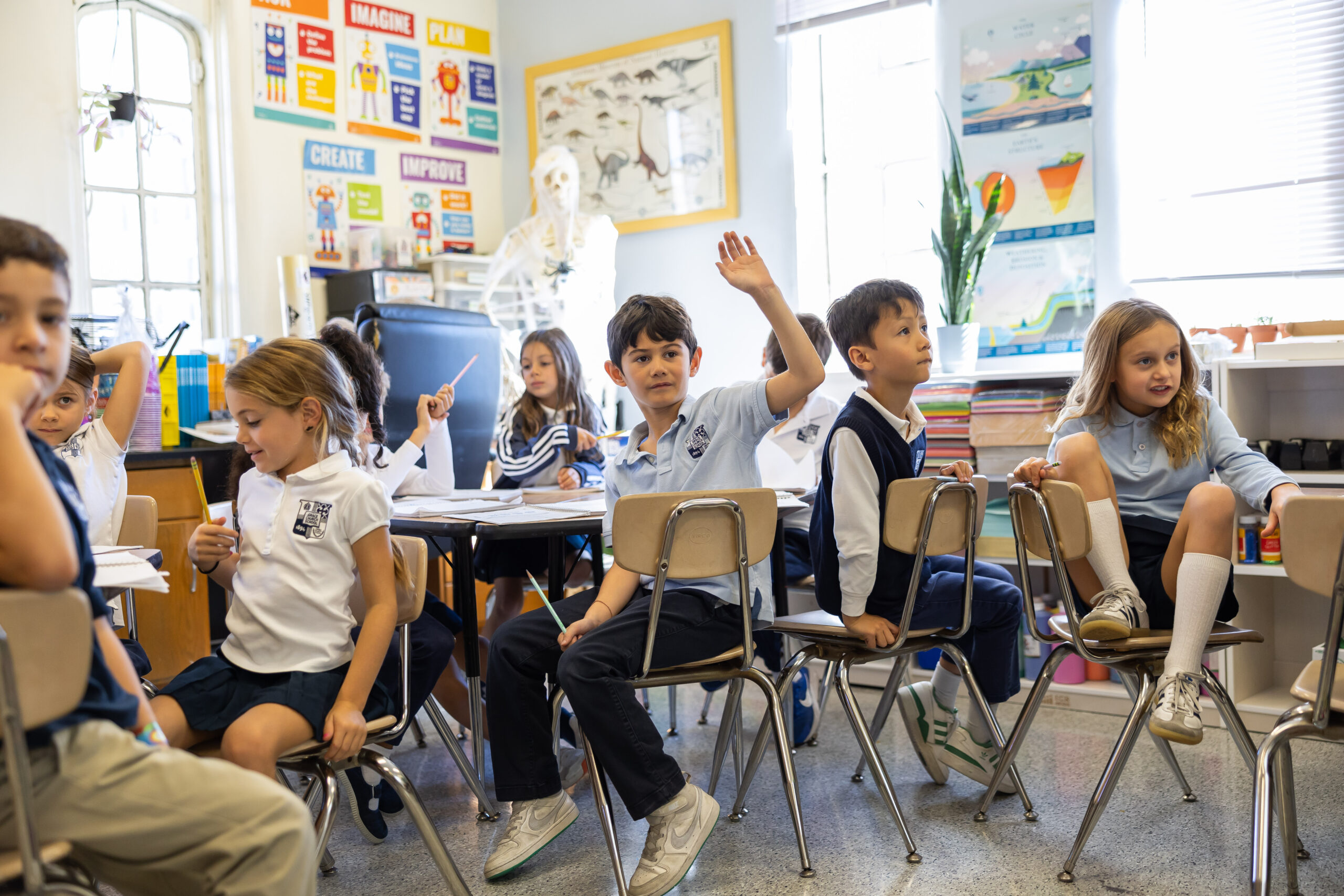
Our faculty design courses around clearly defined goals, not just for what students will know, but for what they will know how to do. They bring those courses to life through evidence-informed practices that set ambitious expectations while providing the feedback and support students need to meet them. Effortful thinking, joyful learning, and deep belonging are the hallmarks of a Grace classroom. Teachers strive to know each student as a unique and inherently valuable individual, designing instruction not for an imagined learner but for the actual children in their care. And in everything they do, Grace teachers model the very habits and virtues they seek to nurture in their students: kindness, curiosity, humility, and courage.