
 Academics
PROGRAMS / EARLY CHILDHOOD
Curious Minds, Solid Foundations
Early Childhood at Grace, spanning junior kindergarten, kindergarten, and first grade, offers an intentionally structured curriculum designed to build foundational skills in literacy, mathematics, social studies, and science alongside visual and performing arts, physical education, and library. Across all disciplines, our teachers ground their approaches in evidence-based practices about how young children learn, providing every student with the support and challenge they need to grow.
Building Confident, Joyful Readers and Writers
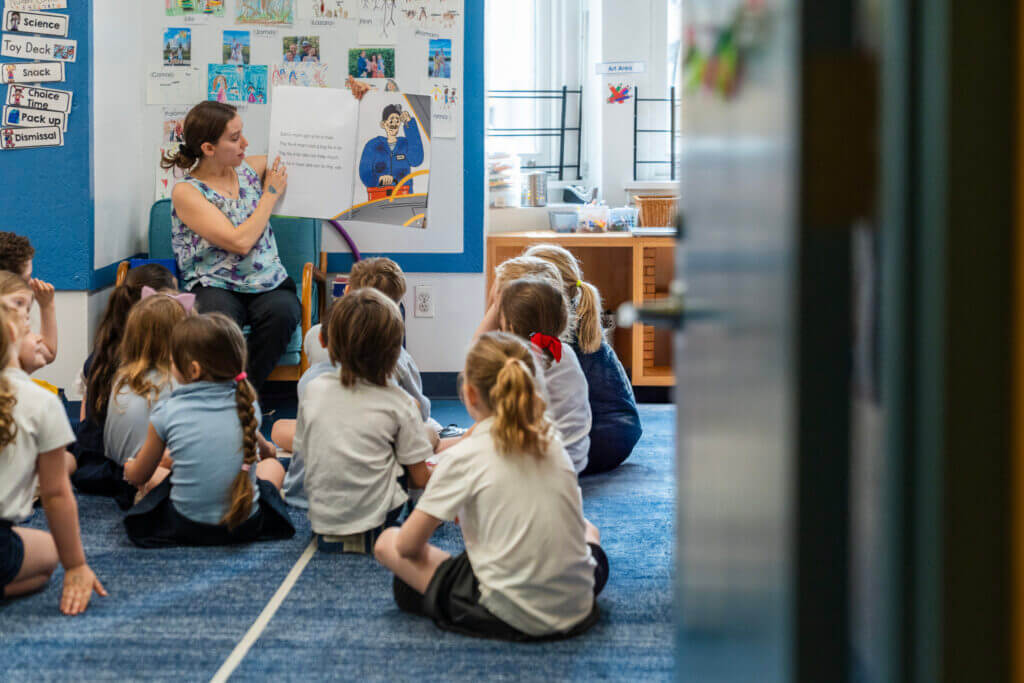
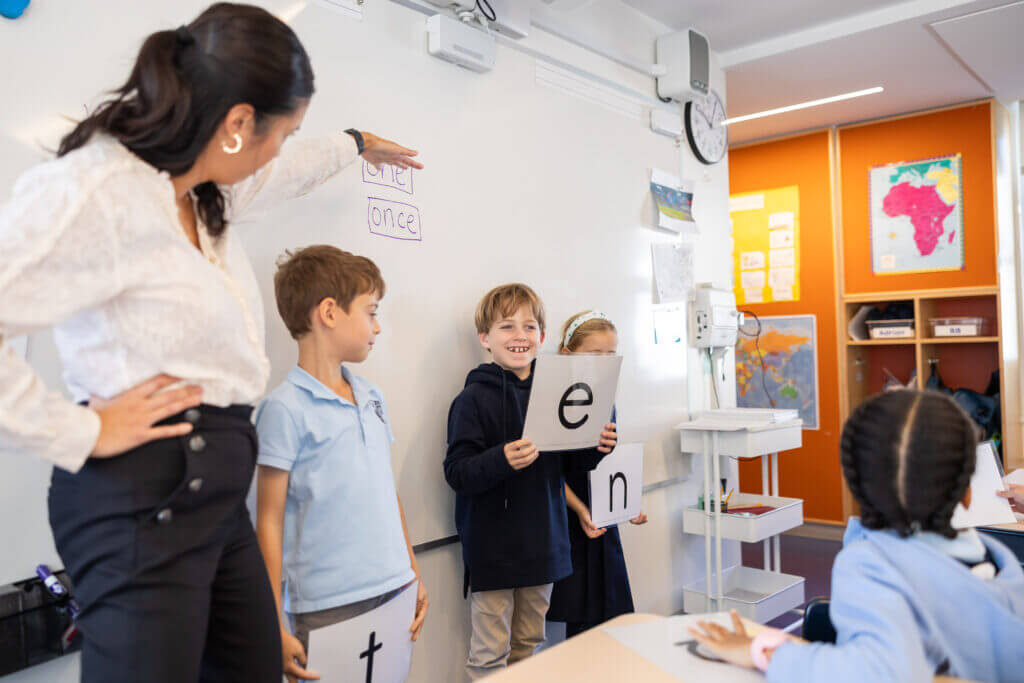
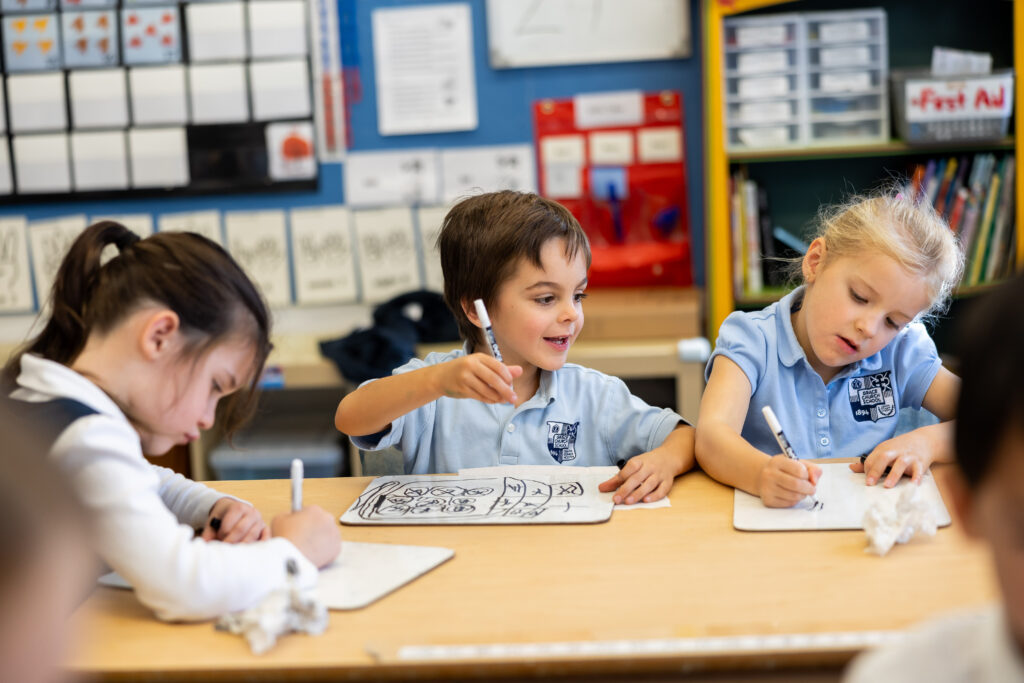
Literacy instruction at Grace is grounded in the science of reading. Our program balances explicit foundational skills—phonemic awareness, phonics, handwriting, and spelling—with rich content knowledge built through thematic units, read-alouds, and storytelling. From their first days in junior kindergarten through the end of first grade, students develop not just the mechanics of reading, but a genuine love of language and story.
Junior Kindergarten
Literacy in JK is play-based and developmentally grounded. The curriculum weaves oral language, phonological awareness, vocabulary, and early writing through read-alouds and thematic units connected to science and social studies. Songs, stories, and games engage students’ natural curiosity and build a love of language from their very first days at Grace.
Kindergarten
Students work within two strands—skills and knowledge—developing phonics and writing mechanics alongside rich content vocabulary. Units such as “Families and Communities,” “Different Lands, Similar Stories,” and “Taking Care of the Earth” build both literacy skills and a broader understanding of the world.
First Grade
First grade deepens foundational skills and content knowledge together, introducing daily narrative and opinion writing alongside increasingly complex reading. Students also meet regularly with their Middle School Book Buddies—a beloved Grace tradition that introduces them to new genres and deepens their sense of themselves as readers.
Building Positive Math Mindsets
Our mathematics curriculum is designed to travel with students—not just through Early Childhood, but throughout their time at Grace and beyond. The goal is not just computational fluency. It is to develop the genuine belief that math is interesting, accessible, and worth the persistence that mastery requires.
Junior Kindergarten
Mathematical thinking is built into the rhythm of the day through contextual themes—apples, pumpkins, snow—that develop numeracy, pattern-making, cardinality, and subitizing. Students experience math as something that describes the world around them, not something that happens only at a desk.
Kindergarten
Students have dedicated daily math time, building computational and conceptual skills through hands-on activities, games, and daily Number Corner routines. Interview-based assessments ensure every student’s progress is closely monitored and instruction is adjusted to meet their needs.
First Grade
First graders develop computational fluency in addition and subtraction, explore geometry and fractions, and tackle logic puzzles and story problems that build perseverance. The emphasis is on both accuracy and the willingness to stay with a problem—a habit of mind that stays with students.
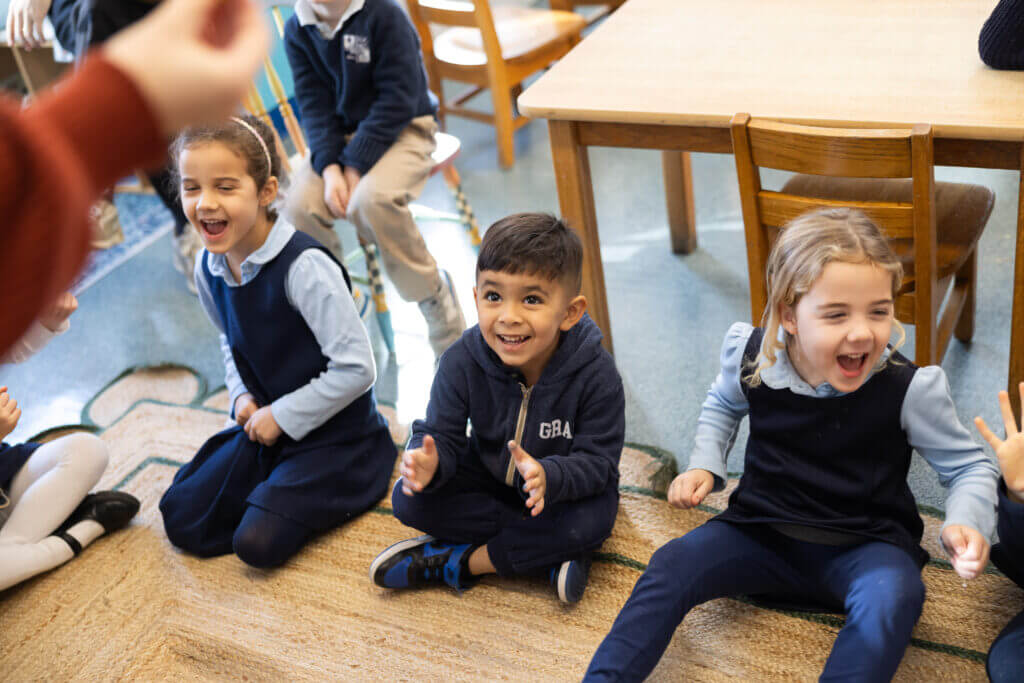
From their first days in junior kindergarten, students develop not just the mechanics of reading, but a genuine love of language and story.
The emphasis of the science curriculum is on observation, inquiry, and the joy of discovery—preparing students to tackle the more abstract scientific topics introduced in Lower School and beyond.
Starting Close to Home, Reaching Further Every Year
The social studies curriculum begins with what students know—themselves, their classroom, their community—and gradually widens its lens. By the time students leave First Grade, they have explored their own identities, their Grace community, their city, and the world beyond it.
Junior Kindergarten
Students explore their new Grace community—the people who make it run, the building itself, and what it means to be part of a group. Through classroom routines and jobs, they learn to articulate themselves, listen to peers, and take responsibility for one another. Units on identity, feelings, and being an upstander lay the ethical foundations that run through every year at Grace.
Kindergarten
Students venture beyond the classroom—interviewing members of the school community, learning about neighborhood helpers, and exploring New York City’s neighborhoods. The city itself becomes part of the curriculum.
First Grade
First graders travel further afield, visiting all seven continents through stories, artifacts, and experiences, including trips to local cultural institutions like the Tibet House, the Brooklyn Museum, and the Joyce Theater, among others.
Observation, Inquiry, and the Joy of Discovery
Science in Early Childhood is designed around one core belief: children are natural scientists. Grace’s rooftop greenhouse, garden beds, and beehives give students real environments to observe and investigate, contextualizing and reinforcing classroom concepts.
JUNIOR KINDERGARTEN
Students observe and care for bees, study animal groups, and explore the natural world through hands-on investigation—even traveling through the school searching for a room large enough to fit a blue whale. In spring, the rooftop greenhouse becomes their classroom, and students study plant growth and life cycles. The year culminates with a visit to the Brooklyn Botanic Garden.
KINDERGARTEN
Students explore the science lab and rooftop spaces, investigating force, gravity, friction, and the properties of matter, including non-Newtonian fluids. They grow radishes on the roof, study animal classifications, and go on a scavenger hunt field trip to the American Museum of Natural History as part of their dinosaur unit.
FIRST GRADE
First graders experiment with light, sound, and buoyancy. They explore light refraction, learn how vibrations create sound, and design tin foil boats to transport cargo, applying their understanding of density and displacement to tackle a real engineering challenge. Their studies of germination on the roof lead to a return visit to the Brooklyn Botanic Garden to explore how plants are used for food, medicine, and more.
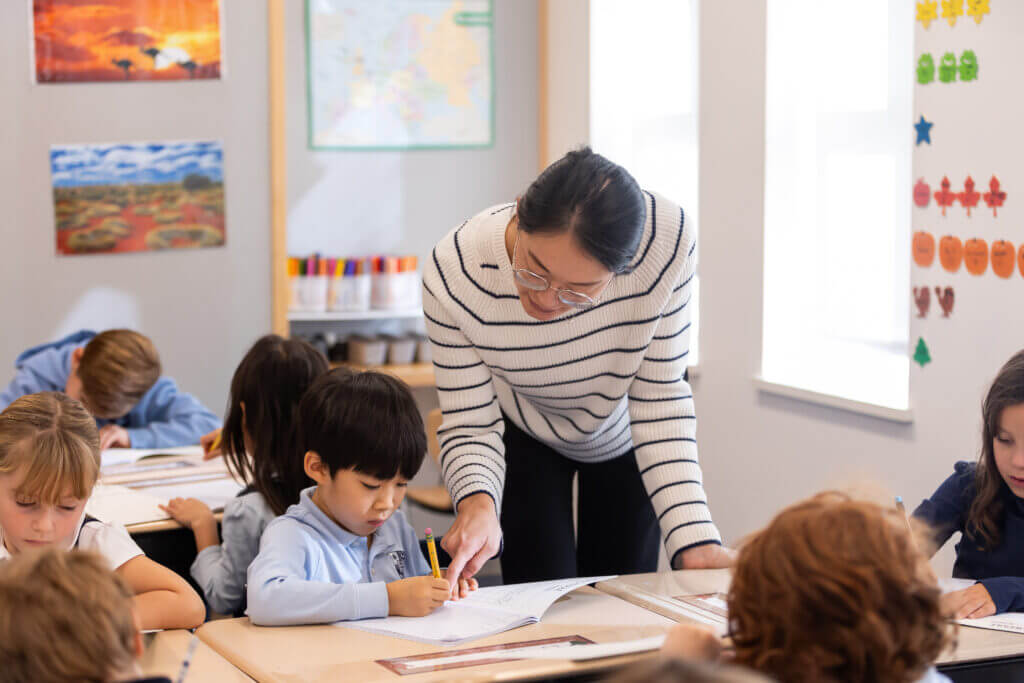
Across every subject, our faculty in Early Childhood share a common approach: they are attentive to each child as an individual, grounded in evidence about how young children learn, and committed to creating an environment where academic challenge and joy coexist.