
High School Oceanography: City as Classroom
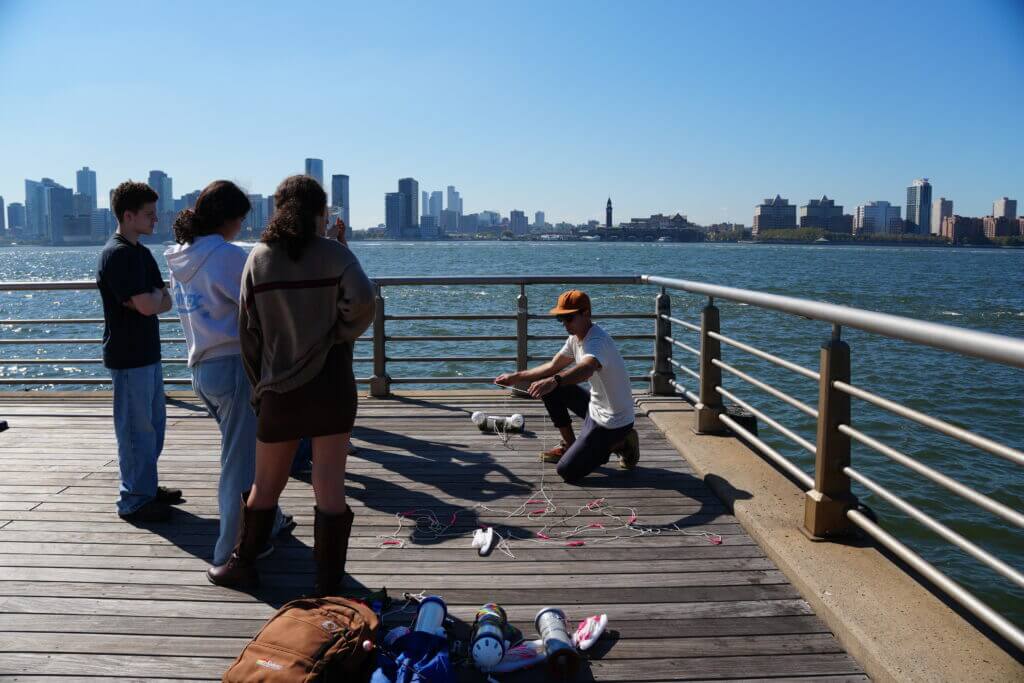
In the high school oceanography course, students extend their foundational understanding of physical and life science to investigate the living and nonliving environments of our oceans.
Teacher James Casey leads students through topics including ocean chemistry, plate tectonics, ocean circulation, marine ecosystems, waves, tides, and marine animal migrations. Along with technical mastery, Casey challenges students to think critically about the ethical questions and responsibilities that come with studying and protecting marine life.
Combining lecture-based instruction and hands-on lab work, the course provides frequent opportunities for students to put their skills into practice. In September, students expanded their understanding of environmental chemistry by conducting fieldwork, collecting water samples from the Hudson River using depth samplers to examine how dissolved oxygen, salinity, pH, nitrates, and temperature vary with depth. After creating a vertical profile of the river through their experimental research, the class was able to analyze local data and to develop a deeper understanding of the physical and biological processes that can impact the Hudson River and marine ecosystems more broadly. Throughout the course, students will continue to engage in their learning both in the classroom and using the “city as laboratory” for experimental research.