
City as a Classroom: Exploring NYC as a Living Archive
This past summer, senior Rostam S.’s mother gave him the book Stranger to the System: Life Portraits of New York City’s Homeless Community.
She purchased the book in 2003 after having a conversation with the author himself, Jim Flynn, in Tomkins Square Park. At first, Rostam admitted he wasn’t sure he’d read a book recommended by his mom. But once he started, he couldn’t put it down. When it came time to select a topic to explore for history teacher Jason McDonald’s class, Flynn’s book was the obvious inspiration. With some detective work—including contacting Flynn’s playwriting partner—Rostam eventually connected with the author and interviewed him over Zoom for a student-produced podcast.
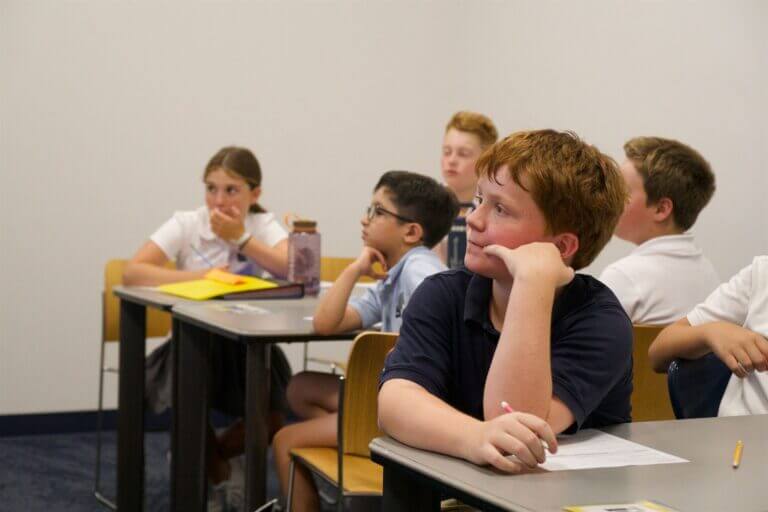
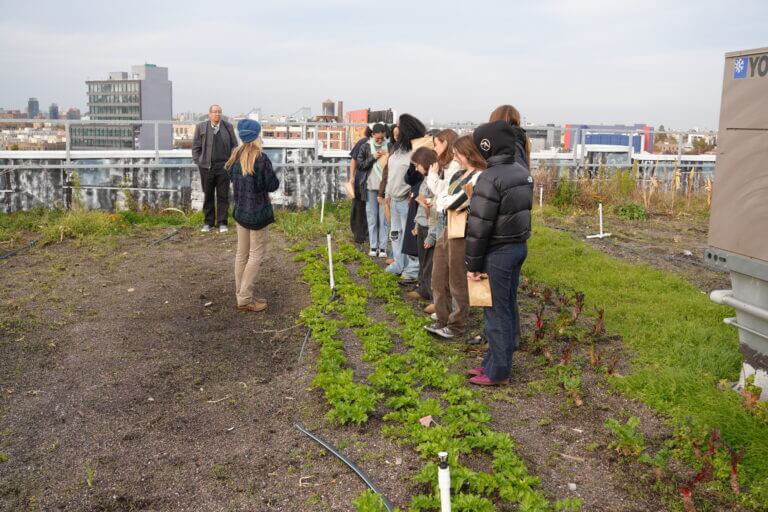
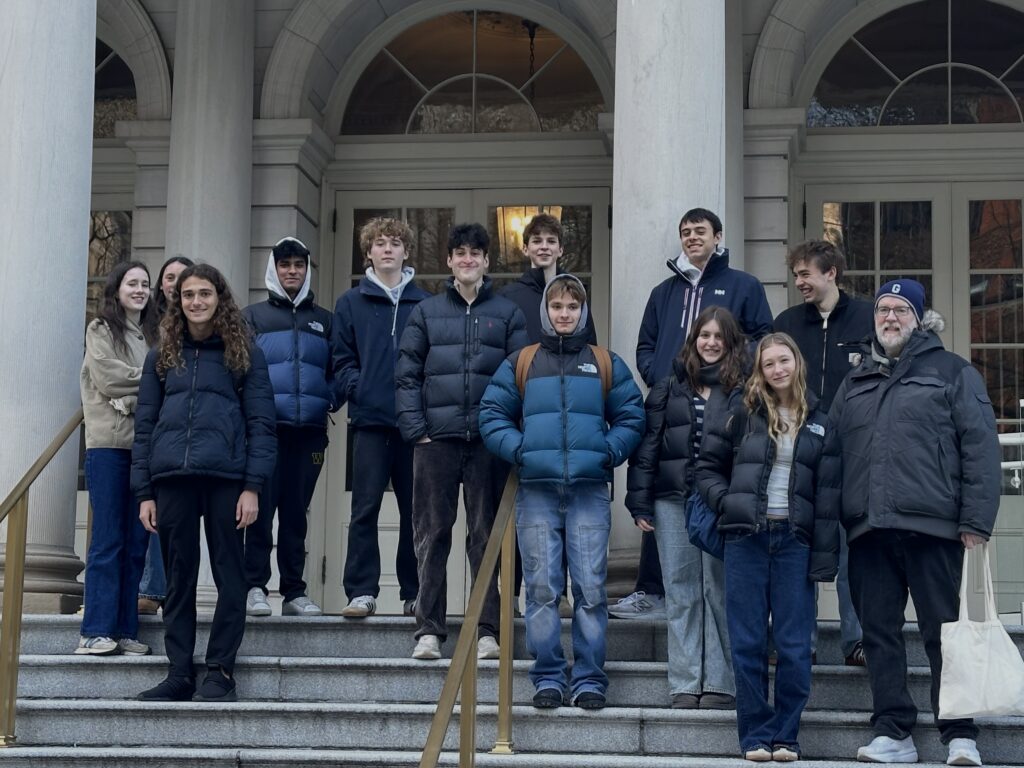
Stories like Rostam’s are at the heart of McDonald’s innovative course, which uses New York City itself as the classroom. Throughout the semester, students explore the city’s history through field trips—to the National Museum of the American Indian, the Merchant’s House Museum, the Grand Central whispering gallery, City Hall, and historic Lenape gathering places near the school, to name a few—and archival research, culminating in a podcast in which each student interviews with an author, historian, or specialist connected to their topic.
Along the way, students learn skills that extend beyond historical research: conducting interviews, shaping conversations, and editing their own audio stories.
“Students aren’t just asking questions and passively recording the answers,” notes McDonald. “The interview is an opportunity for the students to engage with experts after having researched a topic and developed their own ideas. It’s an active exercise that requires a lot of planning. Interviewees frequently reach out to me to share how impressed they are with the caliber of students’ questions and observations.”
Stella F. ’27 met John Sheridan, owner of Village Works Books, during an in-person interview. Mahika G. ’26 visited the Stonewall Inn, where she met LGBTQ activist “Tree” Sequoia before interviewing the daughter of journalist Jerry Lisker, who covered the 1969 uprising. Fletch K. ’26 continued his study of NYC architecture by connecting with Grace parent Jonathan Raible to explore Gothic church design. Jed S. ’27’s research led him through an unexpected chain of contacts—from Colin Jost’s assistant to a producer at Saturday Night Live, whom he interviewed about New York’s storied place in the comedy world.
The project often sparks conversations at home as well. Rostam’s mother was thrilled to see the book she had loved years earlier had become a part of her son’s learning experience. For McDonald, moments like that capture the purpose of the course: helping students discover that New York City—its streets, communities, and stories—is itself a living archive of history.
To listen to the podcasts, click here.