
Living the Legacy: Inside Grace’s MLK Peace Program
Program Highlights: A Week of Shared Learning and Inspiration
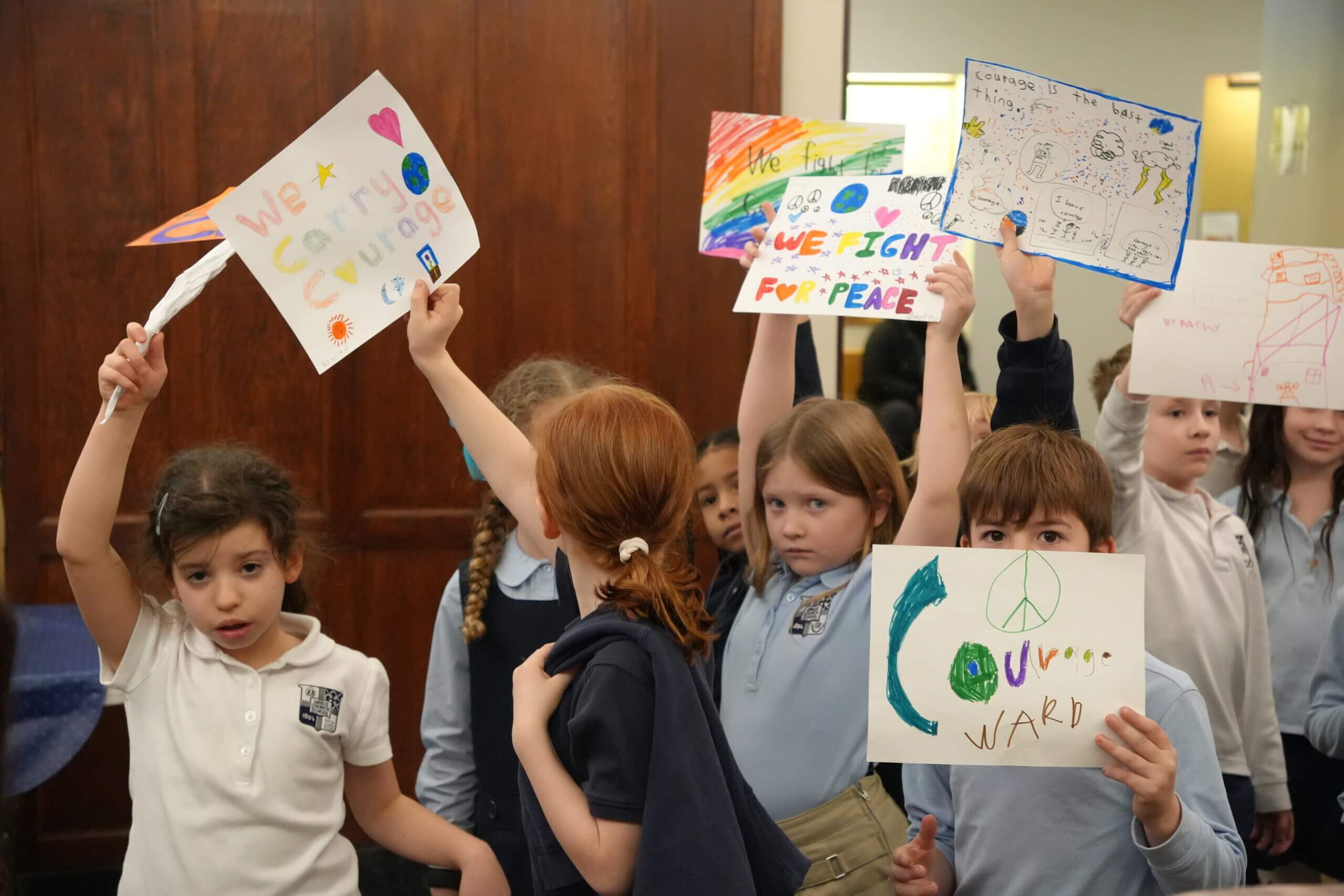
Grace Church School’s 34th annual MLK Peace Program brought together students, faculty, and staff across all divisions to engage with the legacy of Dr. Martin Luther King Jr. The programming is intentionally designed to be both wide-ranging and cohesive, anchored by key shared experiences including Peace Chapel, student performances and presentations in divisional assemblies, keynote speakers, workshops, and service learning projects.
The week began with the all-school Peace Chapel, where students heard from The Rev. Deacon Jacqueline “Jackie” Sanchez-Shabazz, a minister at the Episcopal Church of the Good Shepherd. The Rev. Sarah Wood describes Jackie as “…a mother, grandmother, great grandmother, teacher, leader, poet, and preacher. Deacon Jackie is a role model, inspiration in life, and light in the world!” Rev. Jackie shared a personal reflection and original poetry about her own childhood in New York City and learning about Dr. King’s efforts in the South.
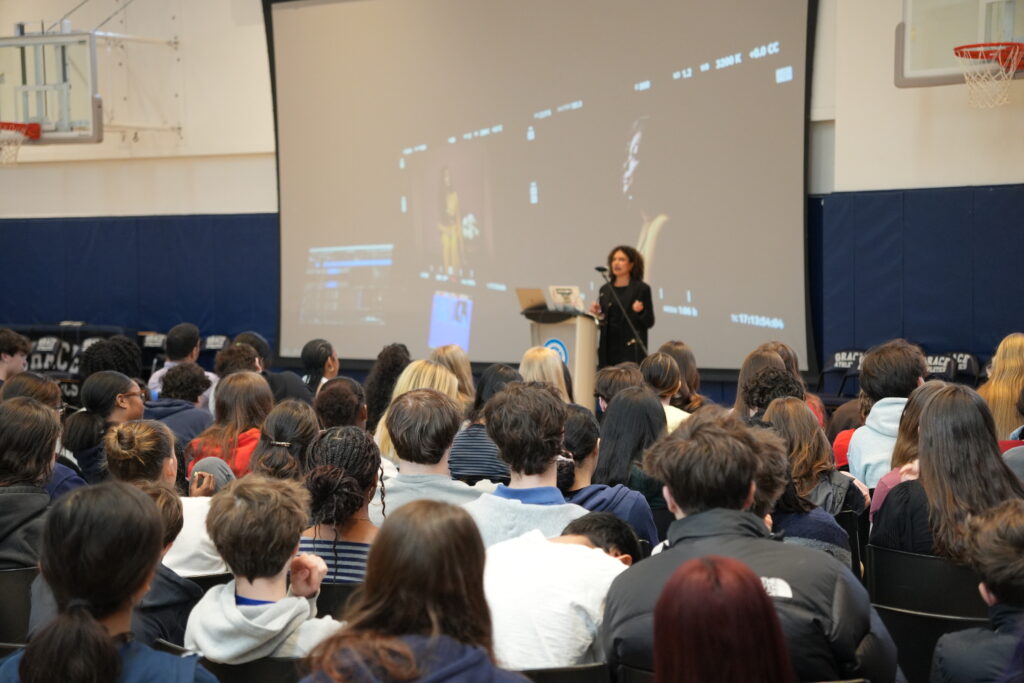
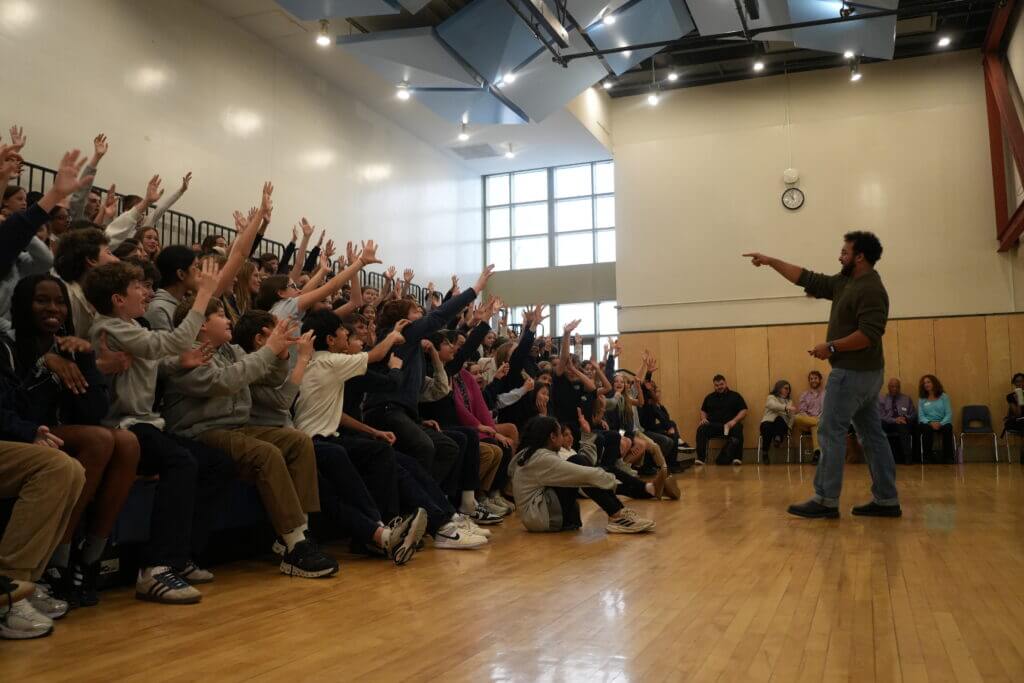
Keynote speakers inspired students across divisions with stories of how they can make a positive impact in the world. High school students heard from Professor Shola Lynch, an award-winning filmmaker and scholar at Spelman College, whose introduction by alumna Sydney G. ’25 highlighted intergenerational connections among women of color in the arts. Students in JK–8 heard from Bradley Freeman, a professional puppeteer whose work with Sesame Street and other productions informed his presentation about how storytelling can build empathy and help celebrate differences.
The high school program featured a range of presentations from guest speakers who explored issues of identity, justice, and community from multiple perspectives. Speakers included: immigration policy expert Richard André; journalist Ahmed Baba; video producer Emma Jehle; Humane World for Animals’ Brian Shapiro; Rob Semple from the Women’s Firefighter Union; and Sherika Swart-Rivera from the Petey Greene Program. In one workshop, lawyers from Major League Soccer—Brook Gardiner, Alyssa Rodriguez, and Laura Franks—introduced students to restorative practices in sports, guiding discussions on identity, belonging, and how empathy and accountability can foster more inclusive communities.
Service Learning: From Reflection to Impact
Service learning is an important component of Grace’s middle and high school curriculum. A key message, highlighted by Diversity Programs Coordinator Antonella Dominguez during the MLK High School Symposium, is the importance of “dignified service.” Students support others in meaningful, respectful ways, recognizing that even small actions can create a broader ripple effect of awareness and change—enriching the students’ lives as much as the lives of those they’re helping.
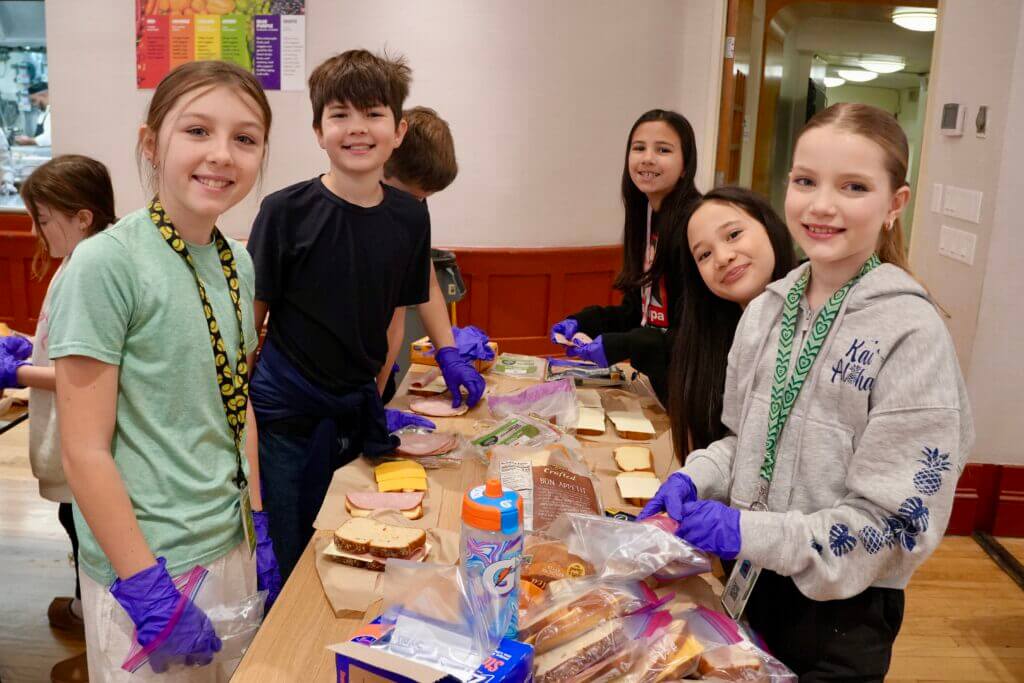
This philosophy was visible throughout the high school day of service and broader MLK Peace Program initiatives, all of which were developed in collaboration with local organizations. Students partnered with Grassroots Grocery, Encore NYC, and God’s Love We Deliver to address food insecurity by preparing and distributing meals and essential items. For the second year in a row, the high school also partnered with JASA, the Jewish Association for Serving the Aging, and students engaged with meaningful service learning opportunities that support JASA’s mission to provide critical care to older New Yorkers. JASA members Annette and Verdean even visited the high school to share their firsthand accounts of the Civil Rights era, including the 1963 March on Washington, for which Verdean arranged transportation for thousands of New Yorkers to travel to D.C. As they spoke, students were riveted; when the high schoolers visited JASA centers the following day to deliver care kits and share songs and stories, the connections became even more special. Across grade levels, students also participate in projects like neighborhood cleanups and making well over 1000 sandwiches for Bowery Mission and community fridges in the neighborhood, often working across divisions to unite in a shared commitment to service.
The impact of these experiences often extends beyond the classroom, with many students taking the initiative to continue volunteering with partner organizations. Eleventh graders Serena H., Siena G., Jasper J., and Gus H. were inspired to launch a service club after completing their ninth grade symposium project with Grassroots Grocery in 2023–24. They spearheaded an initiative to deliver leftover food from the Grace cafeteria to local community fridges, and they continue to participate in regular Produce Parties with Grassroots Grocery, sorting and packing produce that would otherwise be discarded and distributing it to local community centers. Their consistent service work even earned them praise from Grassroots Grocery CEO Dan Zauderer, who recognized their dedication with awards for distinguished service.
Student Participation and Leadership: Empowering Student Voices
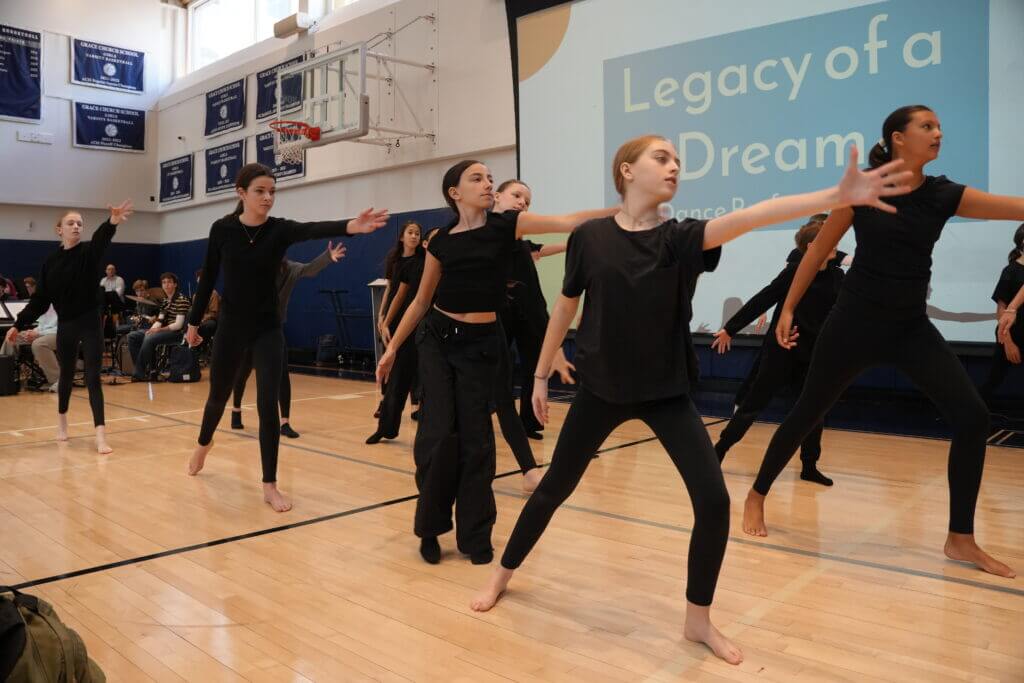
A defining feature of the MLK Peace Program is the central role students play in shaping and leading the experience. Across all divisions, students are not only participants but active contributors, engaging deeply with the material through presentations, performances, and peer-led dialogues. This emphasis on student engagement is a deliberate and essential part of the program’s design, empowering students to take ownership of their learning while developing leadership, collaboration, and critical thinking skills.
At the high school level, student-led workshops are a cornerstone of the program, offering opportunities for students to research, design, and facilitate discussions on issues about which they are passionate. For example, “The Right to Water: Why Millions Still Go Without,” led by juniors Chloe B., Anaika M., and Nifemi A., emerged from the Water1st International Lab Studies course and explored global water access and equity—an embodiment of the program’s goal to connect academic study with real-world impact. Other workshops addressed a wide range of timely topics, including inequities in youth access to mental healthcare in New York City, sustainable fashion and consumer responsibility, and bias in artificial intelligence, among many others. Student participation is equally visible in divisional assemblies, where students in Early Childhood, Lower School, and Middle School share their learning through presentations, music and dance performances, and visual art. These assemblies provide younger students with opportunities to express their understanding of Dr. King’s legacy in creative and age-appropriate ways, while also building confidence in public speaking and collaboration. This was particularly evident in the Middle School assembly’s emcees, Mila B., Nia B., and Daniel S-G. who led their division’s program with care, setting the appropriate tone to spotlight the work of their peers.Artistic expression also plays an important role, with student-created artwork featured throughout the program and often incorporated into assemblies. These works serve as both personal reflections and collective statements, reinforcing key themes of justice, identity, and community.