
 Academics
PROGRAMS / LOwer SChool
Young Minds at Work
In the Lower School, curiosity becomes a discipline as students discover more about what kind of thinkers and people they want to be.
Deeper Reading, Stronger Voices
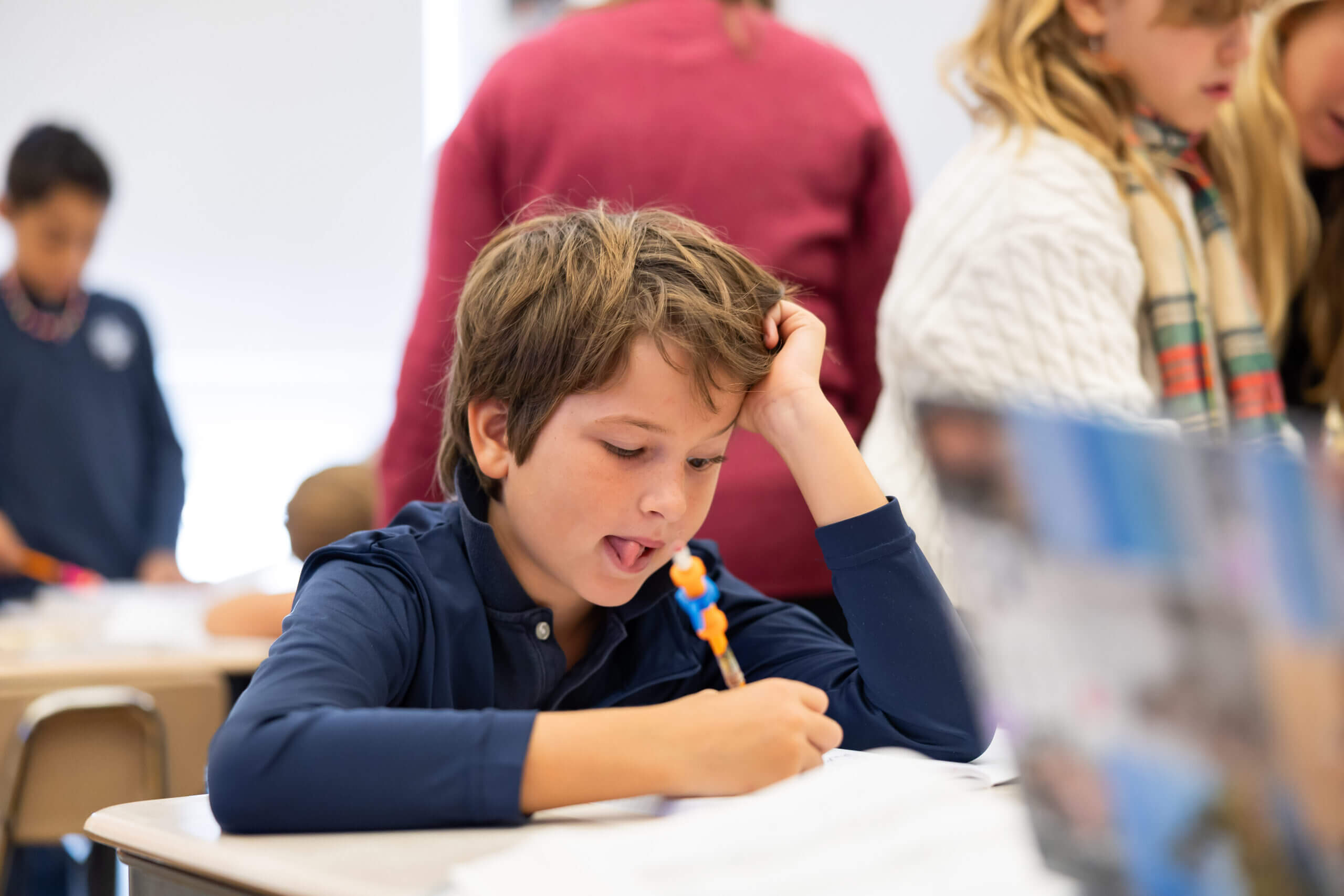
Lower school literacy builds directly on the foundation laid in Early Childhood, expanding students’ skills as readers, writers, and thinkers across a rich range of subjects and genres. Our program is grounded in the science of reading and uses evidence-based practices to develop foundational skills, vocabulary, background knowledge, and comprehension in an integrated way. Across all three years, read-alouds, discussion, and structured writing activities build vocabulary and deepen comprehension, with topics revisited and expanded across grades to support increasingly complex thinking.
In second grade, literacy instruction continues through skills and knowledge strands, which develop phonics, decoding, and spelling alongside carefully sequenced texts in geography, science, world cultures, and the arts. In third and fourth grades, students move fluidly between reading, writing, speaking, listening, and language study, with a growing emphasis on grammar, morphology, text analysis, and critical thinking. In fourth grade, a sustained focus on personal narrative helps students begin to see writing as a tool for reflection and self-understanding. This includes both reading published authors and crafting their own true stories with vivid detail, dialogue, and structure.
Confident, Creative, Mathematical Thinkers
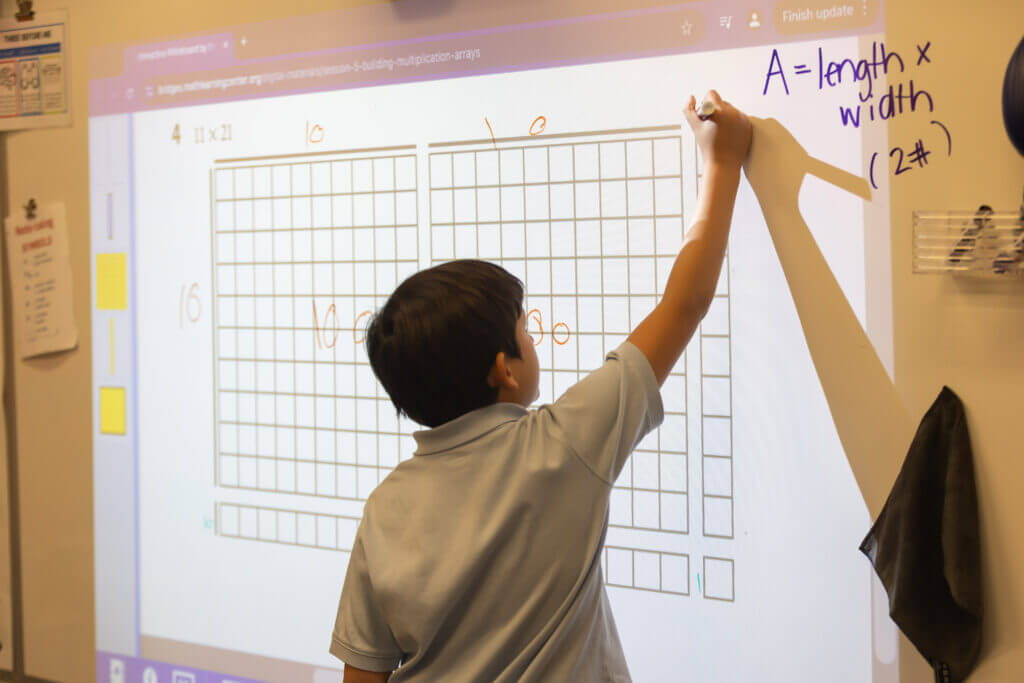
We believe every child is capable of learning challenging mathematics, and our goal is to make sure every Grace student believes it of themselves, too. Our mathematics program is designed to inspire a genuine love of numbers and to build deep numeracy: not just the ability to perform operations, but to understand what numbers mean and why they matter. Through group problem-solving, visual models, and hands-on work with manipulatives, lower school students develop flexible mathematical thinking and discover joy in numbers. Daily Number Corner routines build fluency and algebraic thinking through pattern recognition, and weekly assessment-based math groups ensure that every student is both challenged and supported.
Second graders build fluency with addition and subtraction while developing early algebraic thinking through pattern recognition. Third graders deepen their understanding of multiplication, division, fractions, and geometry, learning to articulate their reasoning and analyze others’ problem-solving strategies. Fourth graders tackle multi-digit multiplication and division, decimals, and measurement, approaching problems with increasing independence and creativity. By the end of fourth grade, students see themselves not just as capable mathematicians, but as empowered problem-solvers ready for more complex abstract and computational thinking ahead.
Students are encouraged to embrace difficulty and develop the resilience that comes from working through something hard.
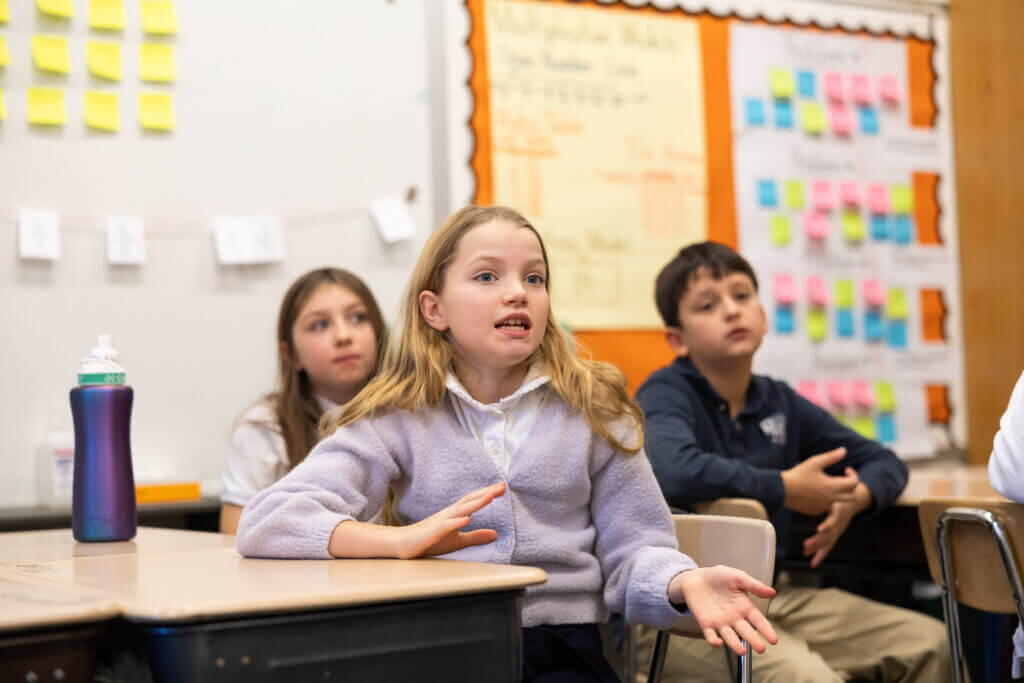
Faculty draw on research-based practices to ensure that every student is both challenged and supported across all disciplines.
Who We Are, Where We Come From, What We Owe
Lower school social studies move further afield and more in depth with each passing year, asking students to think carefully about who they are, where they come from, and what they owe to one another.
Second graders explore New York City, its communities, resources, and changemakers past and present to develop an understanding that all people, including themselves, can be active members of their communities. Third graders investigate the five components of social studies—history, geography, economics, civics, and culture—through the study of Lenape culture, engaging in democratic processes, small group inquiry, and critical reflection on their own values and community.
Fourth graders begin the year by exploring their own identities before moving into comparative political studies of the federal government and those of Ancient Greece, the Mayan Empire, and early China, examining each through the lens of government, religion, social structure, and daily life. A highlight of this work is the Athens vs. Sparta Debate, in which students argue their assigned city-state’s case before a judge, arriving academically prepared and with a genuine sense of purpose. The year culminates in a capstone project in which students design their own civilizations, creatively synthesizing everything they have learned about the central elements of human society to form imagined places with distinct cultures, economies, and political systems.
Curiosity, Rigorously Pursued
Grace’s lower school science program harnesses students’ natural curiosity to expand their knowledge of the natural world and to develop foundational experimental and laboratory skills.
Second graders learn about the world around them by studying the Earth, the water cycle, and water filtration. In third grade, students gain perspective on ecosystems and the environment, using a hands-on study of the honeybees in Grace’s rooftop hives as a way to understand the interconnectedness of the natural world and our food supply. Fourth graders hone their understanding of the scientific method and experimental skills, exploring weather, chemistry, and the pH scale through work in and outside of the science lab. Across the science curriculum, teachers ground the principles of scientific inquiry in meaningful experiences that capture students’ imagination and joy, supporting an ongoing love of science and scientific discovery.
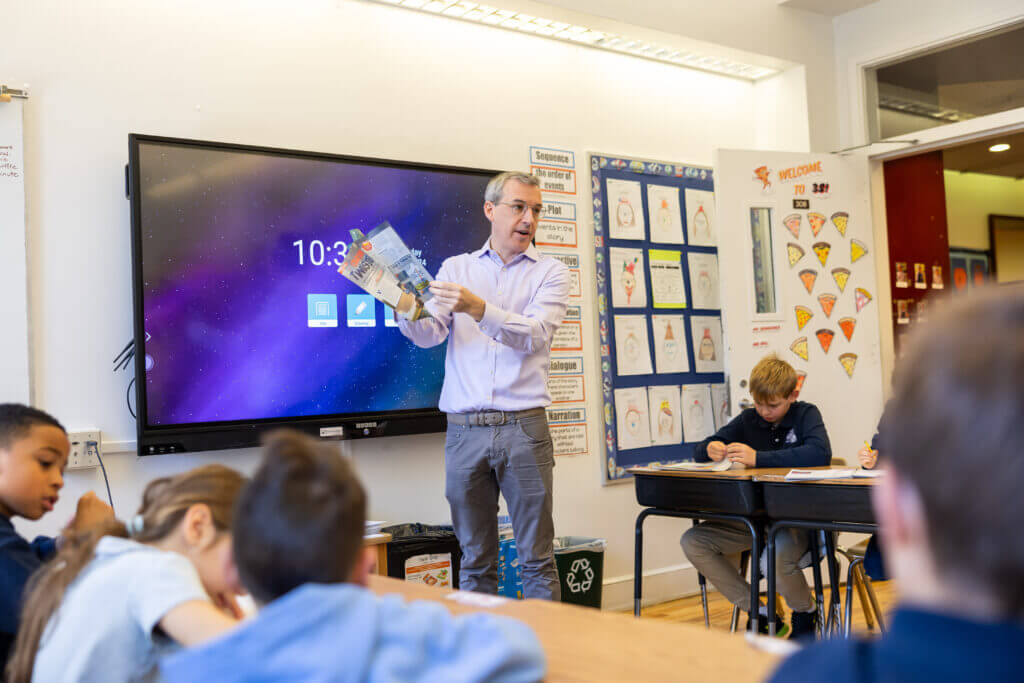
Our instructional practices are grounded in scientific evidence about how children learn, which means that strong, differentiated teaching is the norm rather than the exception. Our commitment is to ensure that all of our students have full access to our program: not by lowering the bar, but by giving every student the support they need to meet it.