
 Academics
Programs / Technology PHILOSOPHY
Using technology is an indispensable skill as well as a bridge to learning, expression, and connection with each other.
Our approach to technology at Grace is to provide the skills and digital tools to enable students and teachers to not only implement the best solution but also to also recognize when a digital solution is appropriate and which solution will best achieve that goal.
We stress the impact of technology on our quality of life, whether it means quick access to information, programming a robot, or communicating through social media. We see technology as a tool, language, and conceptual framework, supporting and sometimes guiding our understanding.
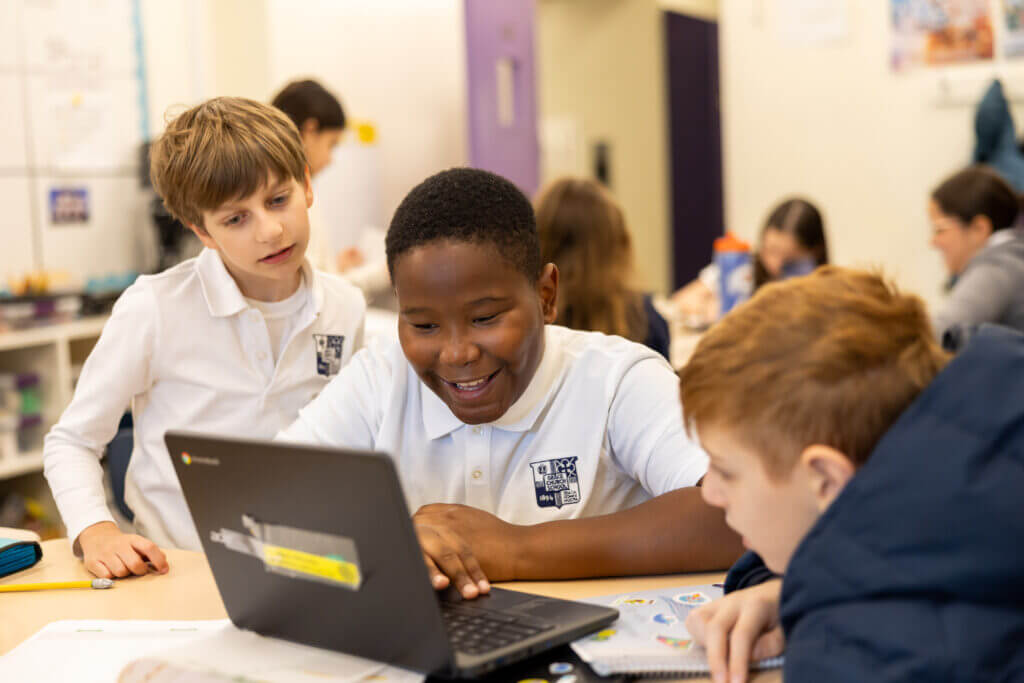
Grace is committed to digital equity and provides, as much as possible, access to the same wide range of technological choices and support. Each grade level emphasizes the skills and digital tools appropriate for that school year. Our One-to-One Chromebook program in the Middle School and our BYOD program in the High School (as well as access to numerous mobile hardware options) support the same high level of learning experience for all students.
“We are practicing the use of technology guided by caring attention.”
Dr. Akbar Ali Herndon, Chief Technology Officer
A.I. skills and integration are taught beginning in the Lower School and continue through the High School. Students are encouraged to explore the benefits and limitations of A.I. through guided exploration in classes. Grace’s A.I. Philosophy and Policy reflects our human-centered values while preparing students to navigate the tools and choices that lie ahead.
Digital Citizenship is at the heart of our computer program. While digital skills are essential for expression, organization and communication, we consider “how to be” with digital tools as important as “how to do it.” At Grace Church School, we pioneered many of the ideas that have become standard practice for acceptable use in schools. From the early days of social media, our approach has been to embrace and experience each relevant, new technology, making it possible to offer guidance to our families and students when needed. Conversations and clear expectations about ethical computer use are introduced in Lower School and continued through High School.
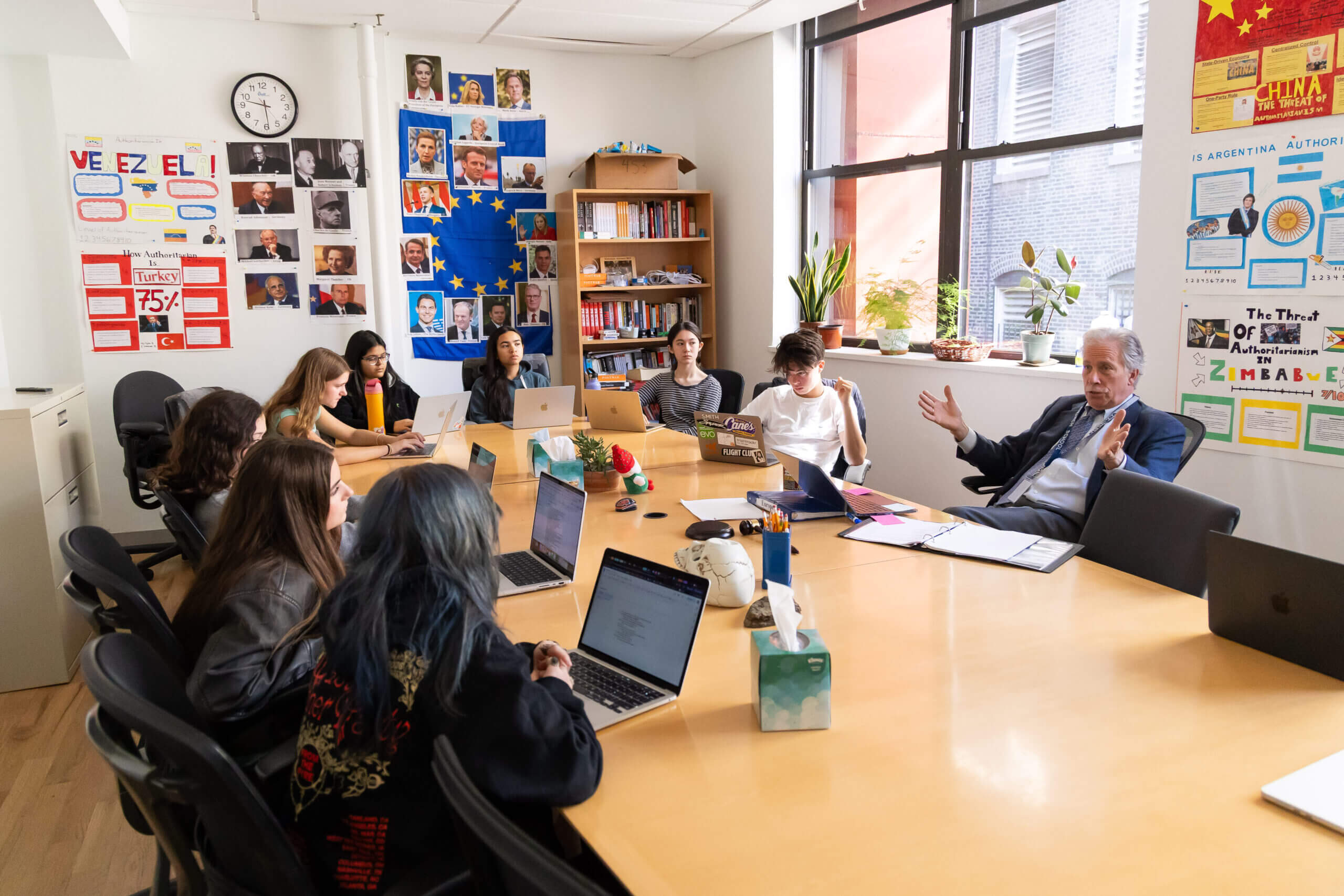
Each high school student has an Apple laptop as a standard resource of their learning toolkit. Equipping students with a personal device challenges each student to be responsible while providing them autonomy over their learning experience. Chromebooks are also provided on a one-to-one basis to all middle schoolers and fourth graders. iPads are available to all grades of Early Childhood, Lower School, and Middle School on an as-needed basis.
Through the mobility of our Chromebook, laptop, and iPad programs, as well as the numerous computers provided throughout the school, students are assured of consistent access between school and home.
Students begin coding in second grade and can continue expanding their coding experience at each grade level. Computer languages include code.org, Scratch, Python, Java Script, SQL, Processing and C.
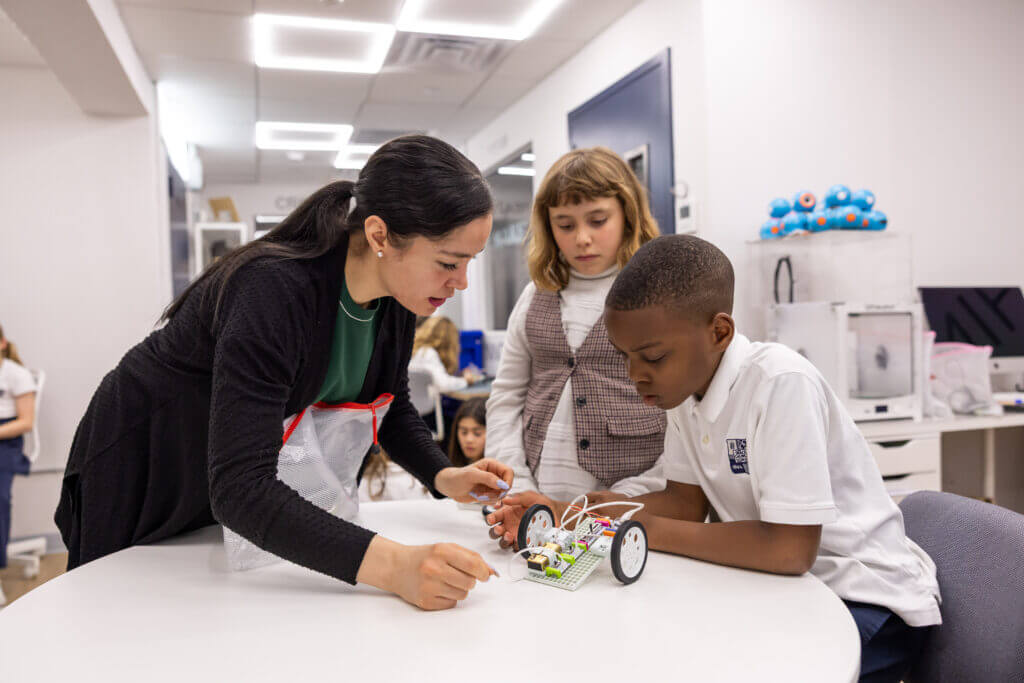
Grace has two maker labs, which serve as the hub for Lower School and Middle School innovation, and a Design Lab in the High School. Students use tools and 3D printers to make and display aesthetic and functional prototypes as well as finished products, combining micro processors, circuits and a range of expressive material.
Robotics are offered at all levels at Grace. Robotics is woven into the curriculum of middle school technology classes and Robotics Club. Middle school students can also participate in the Robotics Club by joining the competitive robotics team to participate in the First Lego League (FLL) competitions. In the High School Division, robotics is incorporated into Digital Tools and Citizenship class and is offered as a technology elective. The high school robotics team competes annually in several citywide robotics competitions. WeDo robotics and NXT Robotics are available to students in the Early Childhood, Lower School, and Middle School through the Grace After School Program (GASP).
Student access to Google accounts begins in third grade, using shared documents and presentation features. Use of school email accounts and the full Google Workspace for Education suite becomes an important part of the computer curriculum starting in fifth grade, continuing through high school. Skills in the use of word processing, spreadsheets, multimedia presentations, and website creation are all developed in the context of cloud storage. Shared document capability adds an essential dimension to collaboration work skills.